What This Guide Helps With
This guide explains what to do immediately if your toilet is overflowing or about to overflow. It covers how to stop the water quickly, what not to do, how to determine the cause, and when to call a plumber.
Quick Answer
If your toilet is overflowing, turn off the water supply valve behind the toilet immediately. Do not flush again. Remove nearby rugs and items from the floor. If the bowl does not drain on its own in a few minutes, try a plunger. If multiple drains in your home are backing up, or if sewage smell is present, stop using all fixtures and call a plumber.
Safety First
- Overflowing toilet water may contain bacteria. Wear rubber gloves when cleaning up. Wash hands thoroughly afterward.
- If the water may reach electrical outlets, appliance cords, or a baseboard heater, stay out of the water and turn off power to the bathroom at the breaker before entering.
- If you smell sewage gas coming from drains, ventilate the space and call a plumber.
What to Do First
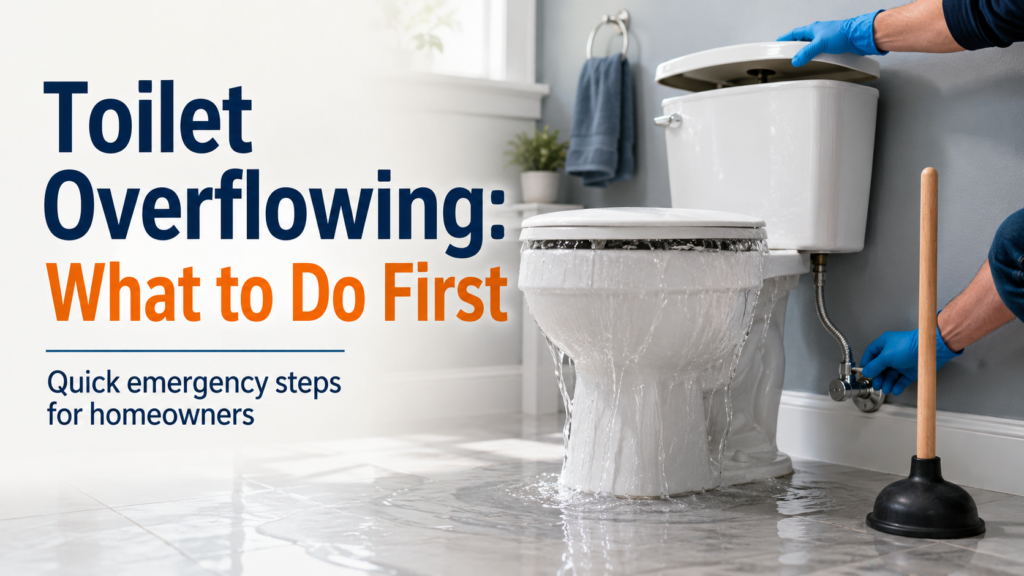
- Turn off the toilet water supply valve immediately. Reach behind or beside the base of the toilet and turn the oval-shaped valve clockwise until it is fully closed.
- If you cannot find or turn the valve, open the toilet tank lid and push the float ball up or push the flapper down to stop water flow temporarily.
- Do not flush again. If the bowl is already at the brim, another flush will guarantee an overflow.
- Remove anything from the floor — bath mats, towels, clothing, cabinet items — before water spreads.
- Place old towels or rags around the toilet base to contain water on the floor.
- Check whether the bowl is draining. Watch the water level in the bowl. If it is slowly going down, the clog may be minor.
- Use a toilet plunger (the type with a flange extension, not a flat cup plunger). Press it firmly over the drain hole and push and pull with force 10 to 15 times.
- Check other drains in the home. If those are slow or backing up too, you likely have a main line blockage — call a plumber.
- Clean and disinfect the floor, toilet base, and anything that contacted overflow water.
What Not to Do
- Do not flush again — this is the most important rule during an overflow.
- Do not use a drain cleaning chemical in an overflowing toilet — these can splash back and cause burns.
- Do not use a flat sink plunger on a toilet — it will not create a proper seal.
- Do not ignore a toilet that overflows repeatedly — this is a sign of a recurring blockage that needs professional attention.
Common Causes of an Overflowing Toilet
| Cause | Signs | What to do |
|---|---|---|
| Toilet clog from waste or paper | Happens once after a specific flush | Plunger usually resolves; auger if plunger fails |
| Non-flushable items | Overflow after flushing wipes, toys, or cotton items | Plunger or professional removal |
| Mainline blockage | Multiple drains slow or backing up at same time | Stop using all fixtures; call a plumber immediately |
| Blocked vent stack | Gurgling sounds in drains, slow drains throughout home | Call a plumber to inspect and clear the vent |
| Faulty fill valve | Toilet water level rises past the overflow tube | Turn off supply valve; call a plumber to replace fill valve |
Safe DIY Checks
- Test the toilet supply valve — can you close it completely? A stiff or stuck valve is a problem to fix before your next emergency.
- Check the flapper inside the tank — it should seal flat when the toilet is not flushing.
- Inspect the fill valve and float — water should stop rising about an inch below the top of the overflow tube.
When to Call a Plumber
Call a licensed plumber if:
- Multiple drains in your home are backing up or draining slowly at the same time.
- You can smell sewage in your home.
- The plunger does not clear the clog after several attempts.
- The toilet overflows every few weeks or with light use.
- The toilet is overflowing without being flushed — this is a sign of a sewer backup.
Damage Documentation Checklist
- ☐ Photos of overflow water extent on floor and walls
- ☐ Note date and time of overflow
- ☐ Document any damaged flooring, baseboards, or adjacent cabinetry
- ☐ Keep receipts from cleanup supplies, plumber, or water damage services
- ☐ Note whether sewage was present in the overflow water
Prevention Tips
- Only flush toilet paper. Do not flush wipes, cotton pads, paper towels, or hygiene products.
- Keep a toilet plunger in each bathroom and know how to use it before an emergency.
- Know where the toilet supply valve is before any emergency happens.
- Have your main sewer line professionally cleaned every 2 to 5 years if you have older pipes or recurring clogs.
Recommended Next Step
If the toilet cleared with a plunger and other drains are working normally, disinfect the affected area and monitor the toilet for the next few days. If it clogs again quickly, call a plumber to inspect the line.
Related Guides
Frequently Asked Questions
What is the fastest way to stop an overflowing toilet?
Turn the water supply valve clockwise behind the toilet. If you cannot reach it, open the tank lid and push the float up or press the flapper down. This stops water from refilling the bowl.
Is toilet overflow water dangerous?
Water from a toilet bowl may contain bacteria and should be treated as contaminated, especially if the overflow came from a sewer backup. Wear gloves, disinfect all surfaces the water touched, and dispose of soaked materials carefully.
What does it mean if multiple toilets back up at once?
Multiple fixtures backing up at the same time almost always indicates a mainline sewer blockage. Stop using all plumbing in the home and call a plumber immediately.
Can I use Drano in an overflowing toilet?
This is not recommended. Chemical drain cleaners can splash back and cause chemical burns in an already full bowl. A toilet plunger or toilet auger is a safer and usually more effective first step.