
What This Guide Helps With
This guide explains what to do if your basement is flooding or has flooded. Whether it is a burst pipe, a failed sump pump, heavy rain, or a sewer backup, the first steps matter. Acting quickly and safely can reduce how much damage your home suffers.
Quick Answer
If your basement is actively flooding, do not go in if water is near outlets, electrical panels, or plugged-in appliances. If it is safe to enter, shut off the water source at the main shutoff valve or fixture valve. Do not use electrical devices in the area. Take photos before moving or removing anything. Call a plumber or water damage professional if the source is unclear or the flooding continues.
Safety First
Do not enter a flooded basement until you check for electrical hazards.
- Do not step into standing water if you can see outlets, extension cords, a plugged-in sump pump, or an electrical panel nearby.
- Turn off power to the basement at your electrical panel before entering, only if you can reach the panel safely from a dry area.
- If the panel is in the basement and underwater or inaccessible, call your utility provider first.
- If sewage is backing up into the basement, avoid direct contact. Wear rubber boots and gloves if entry is necessary.
- If you smell gas at any point, leave the home immediately and contact emergency services or your gas utility provider.
What to Do First
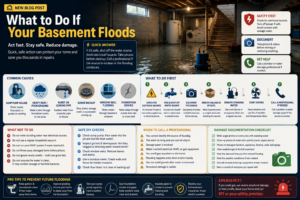
- Check for electrical hazards first. Before anything else, look at the basement from the top of the stairs. Are outlets, appliances, or the electrical panel near the water? If yes, shut off power to the basement at the main panel from a dry location, or call a professional before entering.
- Identify the water source. Is it coming from a pipe, the sump pit, a floor drain, a window well, or through the foundation wall? The source tells you how to stop it.
- Shut off the water if possible. If it is a pipe, turn off the fixture shutoff valve or the main water shutoff valve.
- Do not use floor drains or fixtures upstairs if you suspect a sewer backup. Additional water use will make it worse.
- Take photos and video before doing anything else (see our guide on how to document water damage for the full checklist). Document every angle of the flooding, including the water line on walls, affected appliances, furniture, and flooring.
- Move valuables if safe to do so. Move documents, electronics, and irreplaceable items to a higher level only after confirming no electrical hazard exists.
- Begin removing standing water using a wet-dry vacuum or sump pump if you have one and it is safe to operate. Do not use a regular vacuum.
- Open windows and set up fans to begin drying if the weather and temperature allow.
- Call a plumber or water damage professional if the source is unclear, the water keeps rising, or sewage is involved.
What Not to Do
- Do not enter standing water near electrical sources without confirming power is off.
- Do not use a regular household vacuum to remove water.
- Do not run your HVAC system if water has reached ductwork, the furnace area, or air handler.
- Do not throw away damaged items before photographing them.
- Do not ignore a musty smell after the water is removed — hidden moisture leads to mold within 24 to 48 hours.
- Do not assume the water is clean if it entered through a floor drain or during heavy rain — it may contain sewage.
Common Causes of Basement Flooding
| Cause | What it usually means | What to do |
|---|---|---|
| Sump pump failure | Pump not running, power outage, or float stuck | Check power and float; call a plumber if unsure |
| Heavy rain / poor grading | Water pooling against foundation and entering through cracks | Check gutters, downspouts, and yard slope |
| Burst or leaking pipe | Sudden water from a specific direction | Shut off water at main valve; call a plumber |
| Sewer backup | Multiple drains slow or backing up; sewage smell | Stop using fixtures; call a plumber immediately |
| Window well flooding | Water entering through basement windows | Check window seals and well drainage |
| Foundation crack seepage | Water seeping through a visible crack after rain | Document location; call a waterproofing contractor |
Safe DIY Checks
- Check your sump pump by pouring water into the pit — the float should trigger the pump to run.
- Look at your gutters and downspouts from outside — are they clogged or directing water toward the foundation?
- Inspect window wells for debris blocking drainage.
- Use a moisture meter to check walls and flooring for hidden moisture after cleanup.
- Check your basement floor drain — is it clear, or is it backing up?
When to Call a Professional
Call a licensed plumber or water damage professional if:
- You cannot identify the source of the flooding.
- The water is rising and you cannot stop it.
- Sewage water is involved.
- Water has reached electrical panels, outlets, or HVAC equipment.
- You smell gas anywhere in the home.
- The flooding happens every time it rains heavily.
- You see mold growth after the water is removed.
- Structural damage is visible — cracks, shifted walls, sagging floor.
Damage Documentation Checklist
Use this checklist before cleanup. This information may help when speaking with your contractor, property manager, or insurer.
- ☐ Wide-angle photos of every area with standing water
- ☐ Close-up photos of water entry points (cracks, pipes, drains)
- ☐ Photos of damaged furniture, appliances, flooring, walls, and personal items
- ☐ Video walkthrough of the full basement
- ☐ Note the date and time you first noticed flooding
- ☐ Note the weather conditions if rain-related
- ☐ Save all receipts from emergency cleanup, equipment rental, and contractors
- ☐ Keep a written log of steps you took to reduce damage
- ☐ Do not throw away damaged items before documenting them
Prevention Tips
- Test your sump pump every spring before heavy rain season. Pour water into the pit to trigger the float.
- Install a battery backup sump pump so it runs during power outages.
- Clean gutters and extend downspouts at least 6 feet away from the foundation.
- Grade the soil around your home so it slopes away from the foundation.
- Know where your main water shutoff valve is before any emergency happens.
- Install a water alarm on your basement floor near the sump pit.
Recommended Next Step
If the water is stopped and the area is safe, document the damage, dry the space thoroughly, and monitor for odor, staining, or soft flooring over the next few days. If the source was unclear or the flooding keeps returning, call a plumber or waterproofing professional before repairing walls or flooring. If the flooding started from an upstairs overflowing toilet, the source must be stopped before any basement cleanup.
Related Guides
- Sump Pump Not Working: What to Check
- How to Document Water Damage at Home
- Emergency Home Fixes & Damage Control
Frequently Asked Questions
How long does it take for mold to grow after basement flooding?
Mold can begin developing within 24 to 48 hours in damp, warm conditions. Drying the area quickly and thoroughly is the most important step to reduce mold risk. If you notice a musty smell or visible growth after a few days, consult a professional.
Is it safe to run my furnace or HVAC after basement flooding?
Do not run your HVAC system if floodwater reached the furnace, air handler, ductwork, or any electrical components. Have an HVAC technician inspect the equipment before restarting it.
How do I know if the water came from a sewer backup?
Sewer backup water often has a sewage odor, appears dark or discolored, and may come up through floor drains, toilets, or laundry tubs. If multiple drains back up at the same time, that is a strong sign of a mainline blockage. Stop using all fixtures and call a plumber immediately.
Can I use a regular shop vacuum to remove floodwater?
Only use a wet-dry vacuum rated for liquid removal. A standard vacuum will be damaged by water and could create an electrical hazard. Rent a commercial water extractor for larger volumes.