What This Guide Helps With
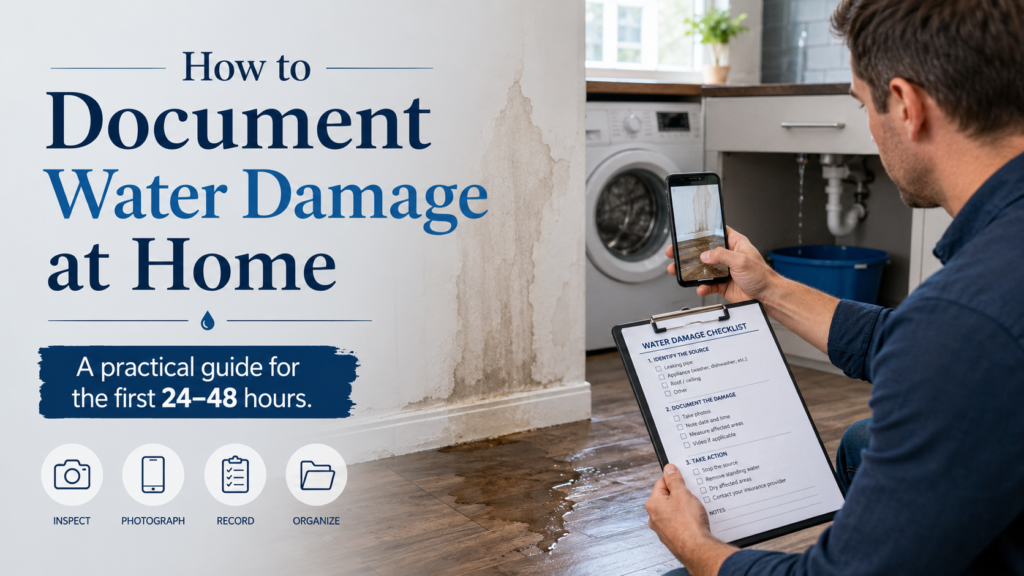
This guide explains how to document water damage inside your home after a leak, flood, pipe burst, appliance failure, or storm. Good documentation helps you organize information when speaking with your contractor, property manager, or insurer. It also helps you track the full scope of damage when making repair decisions.
Quick Answer
Before you move anything, photograph the entire affected area from multiple angles. Take close-up photos of every damage point. Write down the date, time, and what caused the water event. Keep all receipts, contractor communications, and written logs. Do not throw away damaged items until they are photographed and recorded.
Safety First
- Do not enter a flooded area near electrical panels, outlets, or plugged-in appliances without confirming the power to that area is off.
- If sewage is involved, wear rubber gloves and boots. Wash thoroughly after exposure.
- Do not disturb large areas of visible mold without protective equipment — document with photos and consult a professional.
Why Documentation Matters
Water damage often spreads into walls, floors, and structural areas that are not immediately visible. Without documentation, it is easy to underestimate the scope of damage, forget what was in place before repairs begin, or lack evidence of the timeline and cause. Organized records help you have clear conversations with contractors, get accurate repair quotes, and understand what was affected.
This guide does not provide legal or insurance advice. If you need to file a claim, contact your insurer directly to understand their specific requirements and timelines.
Step 1: Photograph Before You Touch Anything
The most important rule of damage documentation is to photograph before you move, clean, or remove anything. Once the cleanup starts, the original state of damage is gone.
What to photograph
- Wide shots of every affected room from each corner — show the full extent of water reach on floors and walls
- Water line marks on walls, baseboards, cabinets, and doors
- The source of the water — the leaking pipe, appliance, drain backup, window, or entry point
- Damaged items in place — furniture, appliances, electronics, flooring, rugs, personal belongings
- Ceiling stains or damage — close-ups of water marks, bubbling, or collapse
- Structural damage — warped baseboards, swollen door frames, buckled flooring
- Mold if present — photograph without disturbing it
Photography tips
- Use a smartphone camera and enable timestamps if your phone supports it
- Photograph each room from at least 4 angles
- Do not use filters or edit the photos — document what is actually there
- Back up photos immediately to cloud storage or email them to yourself
- Record short video walkthroughs for a more complete picture of extent
Step 2: Write Down the Key Facts
- The date and time you first noticed the water
- The cause of the damage (burst pipe, appliance failure, sewer backup, storm, roof leak)
- Which rooms and areas were affected
- What steps you took to reduce damage (shut off water, placed buckets, moved furniture)
- The names and contact information of any contractors or emergency services you called
- The date and time of each contractor visit
- What work was completed during each visit
Step 3: Document Damaged Items Before Removal
Before any item is moved to the curb or trash, photograph and record it.
| Item | Location | Condition before event | Damage description | Photo taken? |
|---|---|---|---|---|
| Area rug | Living room | Good | Saturated, stained, warped backing | Yes |
| Chest freezer | Basement | Working | Motor failed after flooding | Yes |
| Hardwood flooring | Kitchen | Good | Buckled and discolored, approx 20 sq ft | Yes |
Step 4: Keep All Receipts and Communications
- Emergency service fees (plumber, water extraction, restoration company)
- Equipment rental (wet-dry vacuum, dehumidifier, fans)
- Supplies purchased (towels, gloves, plastic sheeting, buckets)
- Contractor estimates, invoices, and completion statements
- All written communication with contractors and service providers
Complete Documentation Checklist
- ☐ Wide-angle photos of every affected room
- ☐ Close-up photos of all damage points
- ☐ Photo of water entry source
- ☐ Video walkthrough of all affected areas
- ☐ Photos of water lines on walls showing height reached
- ☐ Close-up photos of each damaged item before removal
- ☐ Written list of all damaged items with location and condition
- ☐ Date and time of incident recorded in writing
- ☐ Cause of incident described in writing
- ☐ Names and contact info of all contractors
- ☐ Receipts for all emergency services and supplies
- ☐ All contractor estimates and invoices
- ☐ Written record of cleanup steps taken
- ☐ Photos backed up to cloud or external storage
- ☐ No damaged items removed without documentation first
Prevention Tips for Future Water Events
- Know where your main water shutoff valve is and confirm it works — before an emergency.
- Keep a home inventory of major belongings and their approximate values.
- Install a water alarm near sump pits, water heaters, and washing machines.
- Inspect visible plumbing annually for corrosion, drips, or slow leaks.
- Check your roof and gutters each spring and fall to reduce the risk of water entry from above.
Recommended Next Step
If water damage has occurred, do your documentation now before cleanup progresses. Once walls are dry and items are removed, your documentation window is closing. Take your photos, make your notes, and start your receipt file today — then focus on drying the space and getting professional repair assessments.
Related Guides
- What to Do If Your Basement Floods
- Water Heater Leaking from Bottom: What to Do First
- Roof Leak After Rain: Safe First Steps
Frequently Asked Questions
Do I need to document damage before cleanup can start?
Ideally, yes — take photos and write notes before moving or removing anything. However, safety comes first. If standing water presents a hazard, address the safety issue first, then document as much as you can before major cleanup begins.
What is the best way to store damage photos?
Back up photos immediately after taking them to cloud storage so they are not lost if your phone is damaged. Emailing photos to yourself also creates a timestamped record. Organize folders by date and room.
Should I throw away water-damaged items?
Do not discard any damaged item until you have photographed it and recorded it in your damage list. Once documented, it is reasonable to remove them for health and safety reasons.
How long should I keep damage documentation?
Keep all records for at least several years. Water damage can have delayed effects — mold that appears months later, structural issues that develop over time, or disputes with contractors or property managers.