What This Guide Helps With
This guide explains what to do if you find water around the base of your water heater. It covers the most common causes, safe checks you can do as a homeowner, how to reduce damage, and when the problem requires a licensed plumber.
Quick Answer
If your water heater is leaking from the bottom, turn off the water supply to the heater first. For electric heaters, switch off the breaker. For gas heaters, turn the thermostat dial to the pilot setting — do not shut off the gas unless you smell gas. Take photos of the leak, check where the water is actually coming from (tank, valve, or fittings), and call a plumber if the source is unclear or the tank body is leaking.
Safety First
- Do not touch the water heater if standing water is near the electrical connection or the base of an electric unit.
- If your water heater is gas-powered and you smell gas or rotten egg odor, leave the home immediately and contact your gas utility provider or emergency services. Do not troubleshoot a gas smell yourself.
- Do not drain a pressurized tank by opening fittings you are not familiar with.
- Hot water near the leak area can cause burns — give it time to cool before inspecting closely.
What to Do First
- Turn off the cold water supply. There is a shutoff valve on the pipe entering the top of the water heater. Turn it clockwise to close.
- Turn off the power. For electric heaters: switch off the circuit breaker. For gas heaters: turn the thermostat dial to the Pilot position. Do not shut off the gas at the meter unless you smell gas.
- Dry the area around the heater. Use towels to absorb standing water. This helps you see where the water is actually coming from.
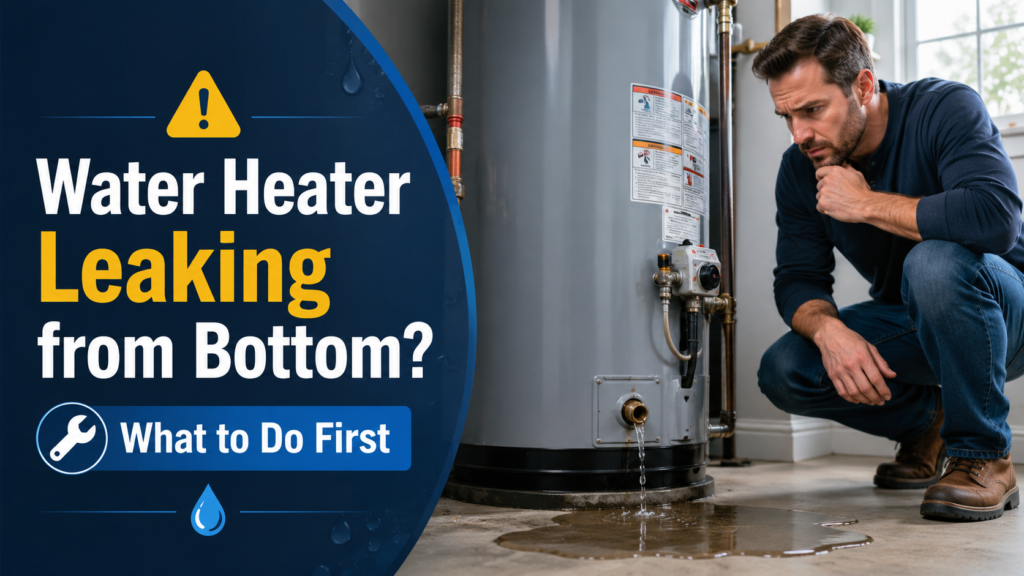
- Identify the source. Look carefully — is the water coming from the tank body, the drain valve at the bottom, the TPR valve on the side, or pipe fittings at the top?
- Photograph everything — the leak location, the tank label, the valve positions, and the surrounding area.
- Place a bucket under active drips if the tank is still releasing water slowly.
- Call a plumber if the tank body is leaking, you cannot identify the source, or water flow does not stop after shutting off the supply.
What Not to Do
- Do not continue using hot water in the home if the heater is actively leaking.
- Do not open the drain valve unless you are trained to do so — improperly draining a pressurized tank can cause burns or flooding.
- Do not ignore the TPR valve — if it is releasing water, it is doing its job protecting the tank from overpressure, and this needs professional attention.
- Do not attempt to repair a corroded or visibly cracked tank body — a leaking tank often needs replacement.
Common Causes of Bottom Leaks
| What you see | Likely cause | What it usually means |
|---|---|---|
| Small puddle after a shower | Condensation | Normal in humid conditions; wipe and monitor |
| Water dripping from drain valve | Loose or worn drain valve | May tighten slightly; if persistent, call a plumber |
| Water from TPR valve pipe | Pressure or temperature issue triggering relief valve | Do not plug the valve; call a plumber |
| Water from tank body or seam | Internal corrosion or tank failure | Tank likely needs replacement; call a plumber |
| Water from top pipe connections | Loose fittings dripping down the tank side | Plumber can often tighten; inspect fittings |
| Rusty or discolored water | Internal corrosion | Professional inspection recommended; replacement likely |
Safe DIY Checks
- Feel around fittings on top of the tank to check if they are damp — a drip can run down the side and pool at the base, making it look like a bottom leak.
- Look at the drain valve (near the bottom) — if water is dripping from it, try a small clockwise turn with a flathead screwdriver. Do not force it.
- Check for a puddle under the TPR valve discharge pipe (on the side of the tank). If water is coming from this pipe, do not block or plug it — it is a safety device.
- Check the age of your tank — most last 8 to 12 years. If yours is older and leaking, replacement is likely more cost-effective than repair.
When to Call a Plumber
Call a licensed plumber if:
- The tank body itself is leaking.
- The TPR valve is discharging water.
- You cannot identify where the water is coming from after drying and inspecting.
- The water heater is older than 10 years and leaking from any part of the tank.
- You smell gas or the pilot light is out repeatedly on a gas unit.
- The leak has reached flooring, walls, or adjacent electrical components.
Damage Documentation Checklist
- ☐ Photos of the leak source and surrounding area
- ☐ Photo of the water heater label (model, serial, capacity, installation date)
- ☐ Note whether floor, drywall, or cabinetry was affected
- ☐ Record date and time you discovered the leak
- ☐ Keep receipts for towels, fans, dehumidifiers, and plumber visits
Prevention Tips
- Flush your water heater tank once a year to remove sediment that accelerates corrosion.
- Test the TPR valve once a year by briefly lifting the lever — it should release water and then stop.
- Inspect the area around your water heater every few months.
- Know the age of your unit — budget for replacement when it approaches 10 years old.
- Install a water alarm or drip pan under the heater to detect leaks early.
Recommended Next Step
If you have shut off the water supply and power, dried the area, and identified the source as a loose valve or fitting, monitor it and call a plumber within a day or two. If the tank body is leaking, the unit is old, or you cannot identify the source, call a plumber today. Do not delay on an active tank leak.
Related Guides
Frequently Asked Questions
Can a small water heater leak wait a few days?
A very small drip from a loose fitting might wait a day, but any leak from the tank body, a running TPR valve, or an expanding puddle should not wait. Active tank leaks often worsen quickly and can cause significant floor and wall damage.
What does it mean if my hot water smells like rotten eggs?
A rotten egg smell in hot water is usually caused by a reaction between sulfur-reducing bacteria and the sacrificial anode rod inside the tank. It is not a gas leak from the heater itself. However, if you smell rotten egg odor near the gas supply line or burner area, treat it as a potential gas leak and contact your utility provider.
How long does a water heater last?
Most traditional tank water heaters last 8 to 12 years with basic maintenance. Tankless units typically last 15 to 20 years. If your tank is approaching 10 years and starting to leak, replacement is often the more practical choice over repair.
Is the temperature and pressure relief valve supposed to drip?
The TPR valve should only open when water pressure or temperature inside the tank exceeds safe limits. A valve that drips continuously may indicate a pressure problem or failing valve. Do not cap or plug it. Call a plumber.