What This Guide Helps With
This guide explains, in general terms, how homeowners insurance typically treats heat-related damage — including AC failures, warped siding, and heat-driven water and mold problems — and why homeowners are often surprised by what is and isn’t covered after an extreme heat event. This is general educational information, not insurance or legal advice; always confirm coverage details with your own policy and agent.
Quick Answer
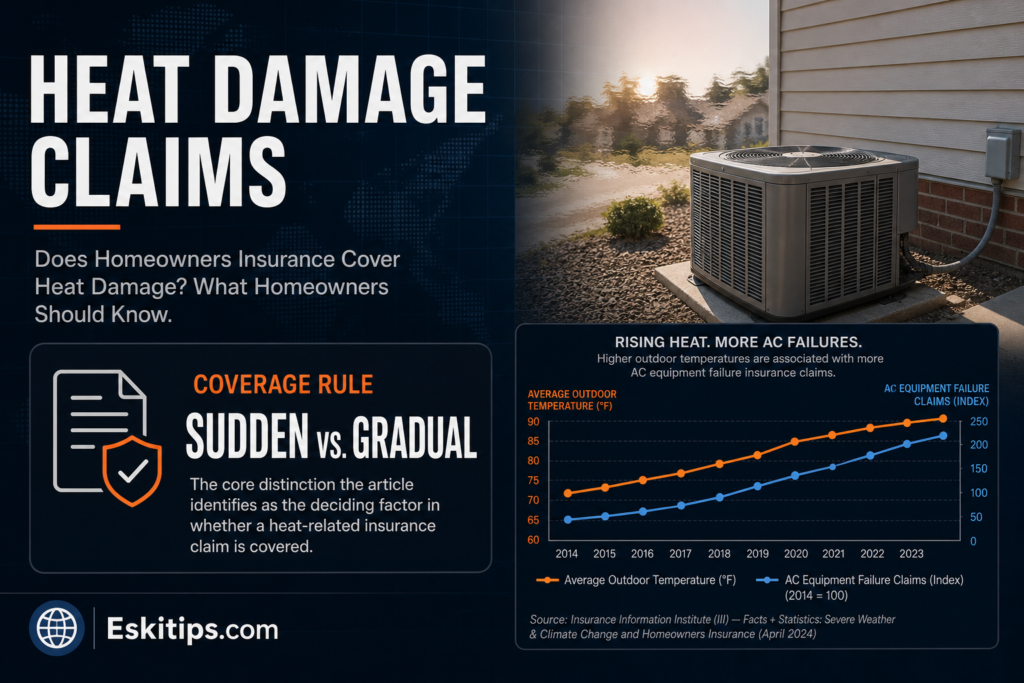
Homeowners insurance generally covers sudden, accidental damage — a tree falling on the roof, a pipe bursting, a fire — but it typically does not cover gradual damage caused by ordinary wear, aging equipment, or slow deterioration, even if extreme heat was a contributing factor. This is why a lightning-caused electrical fire is usually covered, but an air conditioner that simply wears out faster from running constantly during a heat wave usually is not. The distinction between “sudden and accidental” and “gradual and expected” is the single most important factor in how a heat-related claim is evaluated.
Why Heat Damage Claims Are Often Denied or Limited
Standard homeowners policies are built around covering specific, named perils or sudden accidental events, not the ordinary effects of weather doing what weather does. Extreme heat causing a decades-old AC compressor to finally fail, foundation soil to shrink and crack gradually over a season, or aging siding to warp after years of sun exposure are generally treated as maintenance and aging issues — the same way a policy wouldn’t cover a roof that needed replacement simply because it reached the end of its expected lifespan. The exceptions tend to be sudden, direct events tied to heat: a heat-triggered electrical fire, storm damage that happens alongside a heat wave, or specific endorsements some insurers offer for equipment breakdown.
What This Means for Common Heat-Season Problems
| Situation | Typically covered? | Why |
|---|---|---|
| Electrical fire caused by an overloaded circuit during a heat wave | Usually yes | Sudden, accidental event — a named peril on most standard policies |
| AC compressor fails from running constantly in extreme heat | Usually no | Treated as mechanical wear and equipment aging, not a sudden event |
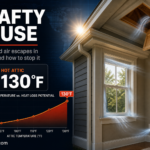
| Vinyl siding warps or melts from heat exposure | Often no, unless caused by a specific covered peril | Generally treated as gradual weather-related wear rather than a sudden loss |
| Water damage from a storm during the same heat wave | Usually yes, subject to policy terms | Storm/water damage is a distinct, often-covered peril separate from the heat itself |
| Mold growth following unresolved heat-related humidity | Often limited or excluded | Many policies cap or exclude mold coverage, especially if linked to a maintenance issue |
| Foundation cracking from soil shrinkage in a hot, dry season | Often excluded | Classified as earth movement or gradual settling in most standard policies |
Steps to Take Before You Assume Something Isn’t Covered
- Read your actual policy’s peril list and exclusions rather than assuming based on general information like this guide — policies vary significantly by insurer and state.
- Document the damage thoroughly the moment you notice it, including photos, the date first observed, and recent weather conditions — see our damage documentation checklist for a full framework that applies beyond just water damage.
- Ask your agent directly about the specific cause — “was this sudden or gradual” is often the deciding question an adjuster will ask, so understanding that distinction before you call helps you describe the situation accurately.
- Ask about optional endorsements such as equipment breakdown coverage, which some insurers offer specifically for HVAC and major appliance failures that standard policies exclude.
- File promptly — most policies have documented deadlines for reporting damage, and delays can complicate a claim regardless of whether the underlying cause was covered.
What Not to Do
- Do not assume a claim will be denied without checking your specific policy — coverage varies by insurer, state, and the specific endorsements you may already have.
- Do not describe a claim informally or guess at the cause when speaking with your adjuster — stick to documented facts and dates.
- Do not delay reporting damage while waiting to “see if it gets worse” — this can affect both the claim timeline and the extent of covered damage.
- Do not throw away damaged materials, equipment, or samples before the adjuster has seen them or you’ve been told it’s fine to proceed.
When to Call a Professional
- Call your insurance agent or company directly to ask how your specific policy treats heat-related damage — this guide is general information, not a substitute for reading your actual policy.
- Call a public adjuster if you believe a claim was wrongly denied and want an independent assessment of the damage and applicable coverage.
- Call the licensed trade professional relevant to the damage (HVAC technician, electrician, structural engineer) for a documented, professional assessment of cause — this documentation often matters as much to a claim as the damage itself.
Prevention Tips
- Review your policy’s peril list and exclusions annually, ideally before peak heat season, not after a loss occurs.
- Ask your agent specifically about equipment breakdown or service line endorsements if your HVAC system, well pump, or major appliances are aging.
- Keep maintenance records for HVAC, roofing, and major systems — insurers sometimes ask for these to distinguish a sudden failure from long-neglected maintenance.
- Keep a running photo inventory of your home’s condition each season, so “before” documentation already exists if you ever need to show a sudden change.
Recommended Next Step
Before assuming heat-related damage is or isn’t covered, read the peril and exclusion sections of your actual policy and call your agent with the specific situation. Document everything as it happens, and consider asking about equipment breakdown coverage if your HVAC system or major appliances are aging — it’s a common gap standard policies don’t fill.
Related Guides
- How to Document Water Damage at Home
- Summer Storm Damage: What to Inspect After a Storm
- Foundation Crack Width Chart: When to Worry and What to Do
Frequently Asked Questions
Does homeowners insurance cover a broken air conditioner during a heat wave?
Generally no, if the failure is due to ordinary mechanical wear or age. Standard policies treat equipment breakdown from normal use as a maintenance issue rather than a covered peril, though some insurers offer optional equipment breakdown endorsements that can cover this specific gap.
Is heat damage to siding or a roof ever covered by insurance?
It depends on the cause. Gradual warping from sun and heat exposure over time is typically treated as wear and generally excluded, while sudden damage from an associated covered peril, such as a storm or fire happening during the same heat event, is more likely to be covered under most standard policies.
What is the difference between “sudden and accidental” and “gradual” damage in an insurance claim?
“Sudden and accidental” refers to a specific, identifiable event, like a tree falling or a pipe bursting. “Gradual” refers to damage that develops slowly over time from ordinary wear, aging, or environmental exposure. Most standard homeowners policies are built to cover the former and exclude the latter, which is the central reason many heat-related claims are denied or limited.