What This Guide Helps With
This guide explains what to do to secure your home once a tropical storm or hurricane watch or warning is issued for your area, covering the exterior, utilities, documentation, and supplies in the order that matters most as the timeline shortens.
Quick Answer
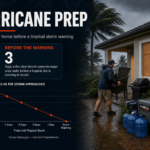
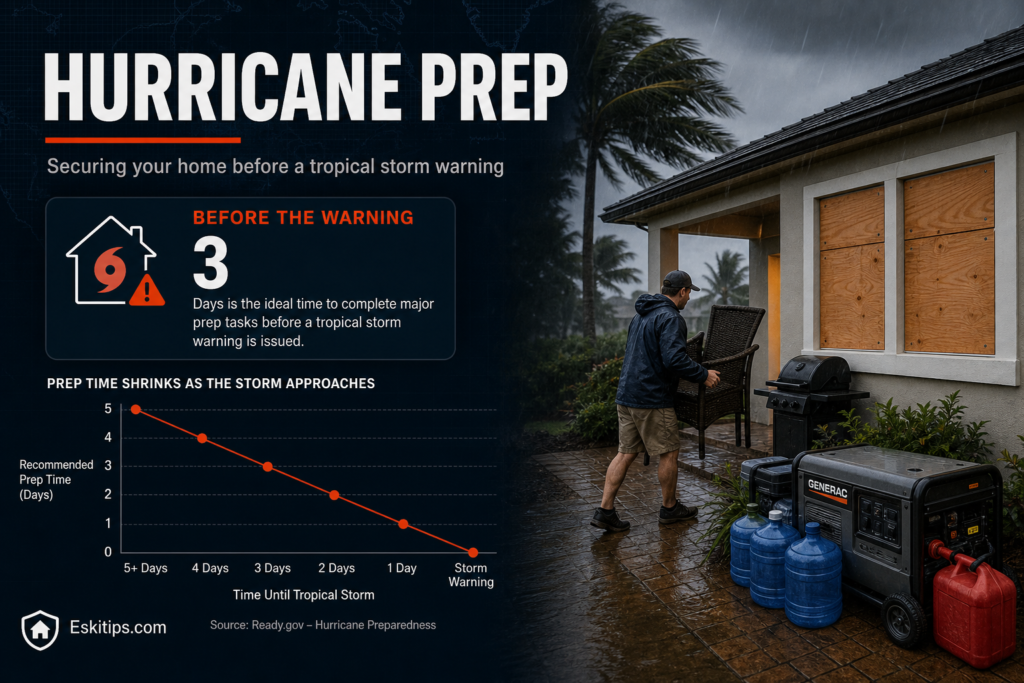
Once a tropical storm or hurricane warning is issued, prioritize in this order: secure or bring in loose outdoor items, protect windows and doors, check and clear gutters and drains, fuel up and test any backup generator, fill containers with water, charge devices, and photograph your home’s current condition for insurance purposes before any damage occurs. Do this as soon as a watch is issued, not after a warning — the window to safely prepare shrinks fast once wind and rain arrive.
Safety First
- Do not wait until a warning is upgraded or wind has already picked up to go outside and secure loose items — this becomes dangerous quickly.
- If local officials issue an evacuation order, follow it — no amount of home preparation is worth risking personal safety.
- Know your home’s flood risk in advance; if you’re in a flood-prone area, prioritize moving valuables and important documents to the highest safe level of the home early.
What to Do First
- Bring in or secure loose outdoor items — patio furniture, planters, decorations, trash cans, and anything that can become a projectile in high wind.
- Protect windows and doors with storm shutters or plywood if you’re in a direct path area, and confirm garage doors are properly braced, since a failed garage door is one of the most common points of structural failure in high wind.
- Clear gutters and downspouts so they can handle the volume of rain a tropical storm brings — see our gutters overflowing guide for what a clog looks like before the storm hits.
- Check your sump pump and confirm a battery backup is in place if you have a basement — see our sump pump guide for what to test now, not during the storm.
- Fuel up and test any backup generator ahead of time, and review our generator safety guide for placement rules before you actually need it.
- Fill water containers and charge all devices, since hurricane-related outages can last considerably longer than a typical summer storm outage.
- Photograph the exterior and interior of your home before the storm arrives — this “before” documentation is valuable for any insurance claim if damage occurs.
- Review your evacuation route and family communication plan if you’re in an area under evacuation advisory, and don’t wait until the last possible moment to decide.
What Not to Do
- Do not wait until the storm is imminent to start outdoor preparation — high wind and rain make this both harder and more dangerous.
- Do not tape windows — this is a widely repeated myth that does not prevent breakage and can create larger, more dangerous glass shards.
- Do not run a generator indoors or in a garage at any point — see our carbon monoxide safety guide.
- Do not ignore an evacuation order to “protect the house” — property can be repaired or replaced; prioritize personal safety.
Preparation Timeline
| Storm stage | What to prioritize | What to do |
|---|---|---|
| Tropical storm watch issued | Early, low-effort prep | Clear gutters, test sump pump and generator, review supplies |
| Hurricane or tropical storm warning issued | Active securing of the property | Bring in outdoor items, protect windows/doors, fill water, charge devices |
| Storm imminent (hours away) | Final safety steps only | Stay indoors; do not go back outside to secure additional items |
| After the storm passes | Safe damage assessment | Check for downed lines and gas odor before inspecting further — see our storm damage checklist |
Safe DIY Checks
- Walk the yard now and identify every item that could become a projectile in high wind, before a watch is even issued for your area.
- Test your sump pump and any backup power source well ahead of hurricane season, not after the first warning of the year.
- Check that your homeowner’s insurance policy details and an emergency contact list are saved somewhere accessible offline.
- Confirm you know your specific flood zone designation and evacuation route in advance.
When to Call a Professional
- Call a contractor before hurricane season if you have known vulnerabilities — an aging roof, damaged siding, or a garage door that doesn’t seal well — rather than discovering them during an active warning.
- Call a tree service before the season if you have large trees with dead branches or a visible lean toward the house.
- Follow local emergency management guidance on evacuation, and never attempt storm repairs or debris removal during active high wind conditions.
Prevention Tips
- Build your hurricane preparation kit before the season starts, including water, batteries, a battery or hand-crank radio, and basic first aid supplies.
- Have storm shutters or precut plywood ready and labeled for each window before a specific storm is forecast, so installation is fast once a warning is issued.
- Review your homeowner’s insurance coverage for wind and flood damage before the season, since flood damage typically requires separate coverage from a standard policy.
- Keep an updated home inventory with photos, stored somewhere accessible even if you lose power or internet.
Recommended Next Step
Use the time between a watch and a warning to complete the highest-priority steps — securing loose items, protecting windows and doors, clearing gutters, and testing backup power — rather than waiting until conditions worsen. If an evacuation order is issued for your area, follow it; documentation and preparation matter far less than personal safety.
Related Guides
- Summer Storm Damage: What to Inspect After a Storm
- Tree Fell on the House After a Storm: Safe First Steps
- Running a Portable Generator Safely During a Power Outage
Frequently Asked Questions
Does taping windows actually help protect them during a hurricane?
No, this is a persistent myth. Tape does not add meaningful strength to glass and can actually create larger, more dangerous shards if the window breaks. Storm shutters or properly installed plywood are the effective options for window protection.
How far in advance should I start preparing my home for a hurricane?
Start low-effort preparation — clearing gutters, testing your sump pump and generator, reviewing supplies — as soon as a tropical storm watch is issued for your area, and complete the more active steps like securing outdoor items and protecting windows once a warning is issued, well before conditions deteriorate.
Is a standard homeowners insurance policy enough to cover hurricane damage?
Standard policies typically cover wind damage but often exclude flood damage, which usually requires separate flood insurance. Review your specific policy and consider flood coverage well before hurricane season if you’re in an at-risk area — see our guide on how insurance treats different types of weather damage for the same sudden-versus-gradual distinction that applies broadly across storm claims.