What This Guide Helps With
This guide explains why tree roots crack driveways and sidewalks, how to assess whether removing the tree, the roots, or just repairing the surface is the right approach, and the safe first steps before calling a professional.
Quick Answer
Tree roots crack pavement by growing thick enough, close enough to the surface, to physically push concrete or asphalt upward from below — this is a root-growth and soil-compaction issue, not a defect in the pavement itself. Cutting the offending roots without professional guidance can seriously destabilize or kill the tree, since large structural roots near the trunk often can’t be removed safely. The right fix depends on the tree’s size and health, how close the roots are to the trunk, and whether the driveway or sidewalk can be rerouted or reinforced instead.
Safety First
- Heaved or cracked pavement is a trip and fall hazard — mark or block off significantly uneven sections, especially along walkways used at night.
- Call 811 before any digging near roots or pavement repair to avoid hitting buried utility lines running near the driveway or sidewalk.
- Do not attempt to cut large structural roots close to the trunk yourself — this is a job for a certified arborist, since it can compromise the tree’s stability or health.
What to Do First
- Identify which tree and which roots are involved. Trace the cracking pattern back toward the nearest large tree, and note how close the visible roots are to the trunk versus further out along a root’s length.
- Assess the tree’s importance and health. A large, healthy, mature tree is worth protecting and working around; a smaller or already-declining tree may make removal a more reasonable option.
- Check how far the roots are from the trunk. Roots closer to the trunk are typically larger, more structurally important to the tree, and riskier to cut than smaller roots further away.
- Consider whether the pavement can be rerouted around the root system instead of cutting roots at all — this is often the safest option for both the tree and the pavement’s long-term stability.
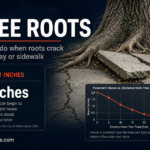
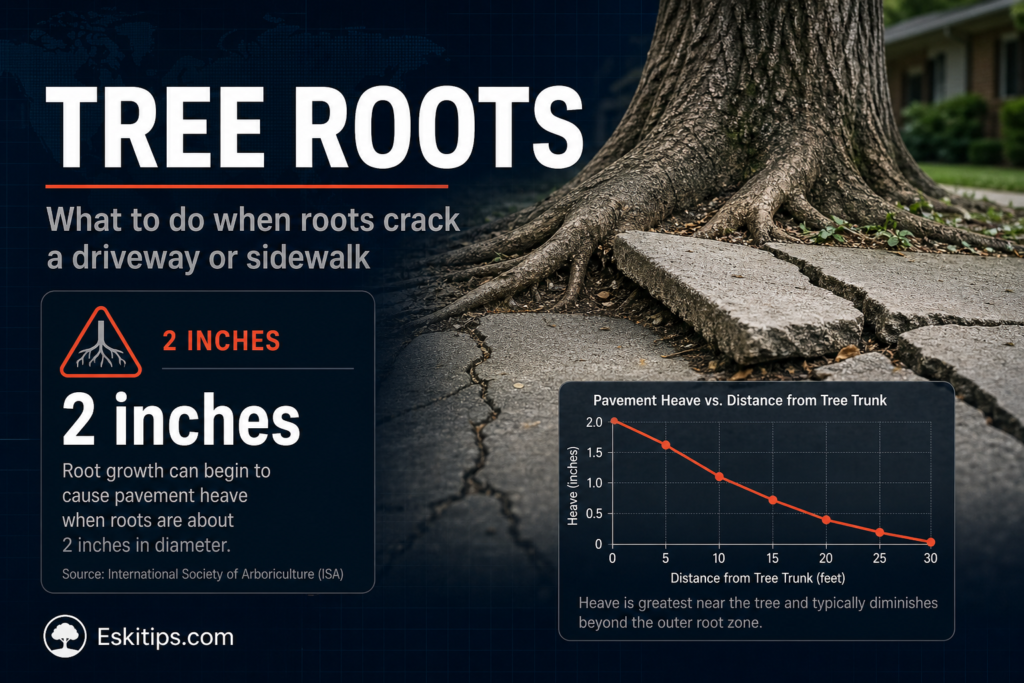
- Get an arborist’s assessment before any root cutting is planned, especially for roots larger than about 2 inches in diameter or located within a few feet of the trunk.
What Not to Do
- Do not cut roots yourself without professional guidance, especially large ones close to the trunk — this can destabilize the tree or introduce disease through the cut.
- Do not simply pour new concrete or asphalt directly over damaged pavement without addressing the root that caused the problem — it will heave again as the root continues growing.
- Do not assume grinding down a heaved section is a permanent fix — this addresses the trip hazard temporarily but not the underlying cause.
- Do not remove a large, healthy, mature tree solely for pavement convenience without exploring rerouting or root barrier options first, since mature trees add significant property value and can’t be replaced quickly.
Common Approaches and What They Mean
| Situation | Reasonable approach | Who to call |
|---|---|---|
| Minor heaving, roots are small and further from the trunk | Root pruning by a professional, then repair the pavement | Certified arborist for root work, then a paving contractor |
| Major heaving, large structural roots near the trunk | Reroute the pavement around the root system if possible | Arborist and a paving/hardscape contractor together |
| Tree is small, unhealthy, or in poor condition already | Removal may be the more practical long-term solution | Certified arborist to assess and safely remove |
| Repeated cracking after past repairs | Install a root barrier before repaving to redirect future growth | Arborist for barrier placement, paving contractor for the surface |
Safe DIY Checks
- Measure the distance from the cracking to the tree’s trunk and note the approximate diameter of any visible roots.
- Check whether the tree shows other signs of root-related stress, like a change in canopy health, which can affect the removal-versus-preserve decision.
- Look at whether the driveway or sidewalk could realistically be rerouted a foot or two to avoid the main root zone.
- Photograph the crack pattern over time to see if it’s actively worsening or has stabilized.
When to Call a Professional
Call a certified arborist if:
- Roots larger than about 2 inches in diameter, or located close to the trunk, are involved.
- You’re considering removing a tree solely because of pavement damage and want a professional opinion on the tree’s health and value first.
- You want a root barrier installed as part of a repaving project to prevent recurrence.
Call a paving or hardscape contractor once the root situation is assessed, so the repair (reroute, root barrier, or standard patch) addresses the actual cause rather than just the visible crack.
Prevention Tips
- Install a root barrier when planting new trees near future pavement locations, or before repaving near an existing mature tree.
- Choose tree species with less aggressive surface-root growth habits for new plantings near driveways and walkways.
- Avoid planting large-growing trees too close to pavement in the first place — check a species’ mature root spread before planting.
- Have an arborist periodically assess trees near hardscaping, especially as they mature and root systems expand.
Recommended Next Step
Before deciding between root pruning, rerouting the pavement, or tree removal, get a certified arborist’s assessment of the tree’s health and the roots actually involved — this decision has long-term consequences for both the tree and any repair’s durability. Once you know what’s safe to do with the roots, a paving contractor can address the surface accordingly.
Related Guides
- Foundation Crack Width Chart: When to Worry and What to Do
- Lawn Turning Brown in Summer Heat
- Gutters Overflowing in Heavy Rain
Frequently Asked Questions
Can I just cut the roots cracking my driveway myself?
This is not recommended, especially for roots larger than about 2 inches in diameter or close to the trunk, since cutting structural roots can destabilize the tree or introduce disease. A certified arborist can assess which roots, if any, are safe to prune without harming the tree.
Will cutting the roots kill my tree?
It depends on which roots and how many are removed. Cutting a large share of a tree’s structural root system, especially near the trunk, can seriously harm or kill it, which is why an arborist’s assessment matters before any cutting is done near valuable or mature trees.
Is removing the tree always the best solution for cracked pavement?
Not necessarily. Rerouting the pavement around the root system or installing a root barrier during repair can often resolve the problem while preserving a healthy, mature tree, which typically adds more property value than the cost of a more creative pavement solution.