What This Guide Helps With
This guide explains the safe first steps to take when a tree or large branch falls on your house during a storm, how to tell whether it’s safe to be near, and what to do before a contractor or insurance adjuster arrives.
Quick Answer
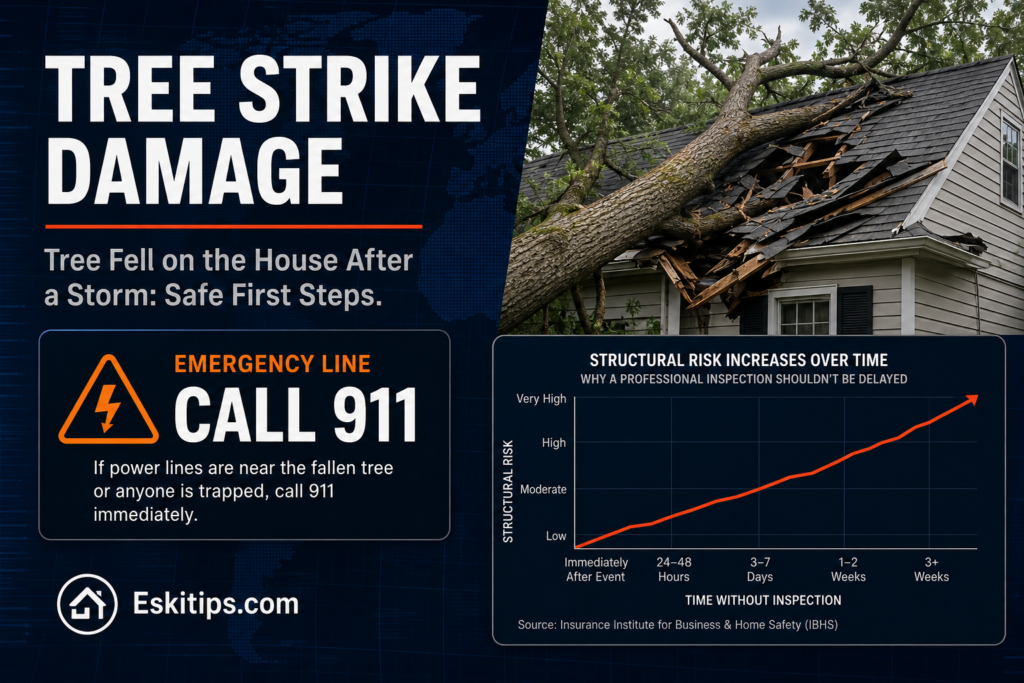
If a tree falls on your house, check for downed power lines before approaching — if any wires are near or tangled in the tree, stay back and call 911 or your utility immediately. If it’s safe, check for anyone trapped or injured first, then check for gas odor and signs of structural damage such as a sagging roofline, cracked walls, or a hole. Do not go inside if the tree appears to be resting on the roof structure itself, and do not attempt to cut or remove the tree yourself. Photograph everything before any cleanup begins.
Safety First
A tree resting on power lines or a home’s structure is dangerous even if nothing looks obviously wrong.
- If the tree is touching or near power lines, treat the entire tree and the ground around it as energized. Stay back and call your utility and 911 immediately.
- If you smell gas, hear hissing, or suspect a gas line was disturbed, leave the house immediately and call your gas utility or 911 from a safe distance.
- Do not walk on a roof or attic area that has a tree resting on it — the structure may be compromised even without visible sagging.
- Watch for broken glass, splintered wood, and unstable branches that can shift or fall further without warning.
What to Do First
- Check for downed power lines anywhere near the tree, the house, or the yard before anyone approaches. If in doubt, treat everything as live and stay back.
- Account for everyone in the home and check for injuries. Call 911 immediately if anyone is trapped or hurt.
- Check for gas odor near the impact area, especially if the tree hit near where a gas line, meter, or appliance vent runs.
- Assess visible structural damage from a distance — a sagging roofline, a hole, cracked walls, or windows blown out are signs the structure may be compromised. Do not enter rooms directly under a damaged roof section.
- Shut off utilities if you can do so safely — water at the main valve if pipes may be affected, and electricity at the panel if it can be reached from an unaffected, dry area.
- Photograph and video everything before any tree removal or cleanup begins — see our damage documentation guide for a full checklist that also applies here.
- Cover openings temporarily only if it’s safe to do so and only to prevent rain intrusion — use tarps weighted down, not permanent fixes, until a professional assesses the structure.
- Call your insurance company and a licensed tree removal or restoration contractor before attempting any cleanup yourself.
What Not to Do
- Do not attempt to cut or remove a fallen tree yourself, especially one under tension, leaning on the structure, or near power lines — this is one of the most dangerous DIY tasks in storm cleanup.
- Do not enter any room where the ceiling or roof structure is visibly sagging or cracked.
- Do not remove debris or begin repairs before photographing the damage from multiple angles.
- Do not assume a “small” branch impact is harmless — even modest impacts can crack roof decking or dislodge flashing in ways that aren’t visible from the ground.
- Do not run appliances or HVAC systems in areas where the tree impact may have affected wiring or ductwork.
What the Damage Pattern Usually Means
| What you observe | Likely severity | What to do |
|---|---|---|
| Tree resting on roof, no visible interior damage yet | Structural risk even without visible interior signs | Stay out of the area below; call a structural professional before entering |
| Cracked ceiling, sagging drywall, or daylight visible through the roof | Active structural compromise | Evacuate that area immediately; call emergency tree removal and a structural engineer |
| Branch impact with only exterior gutter or siding damage | Likely limited to exterior systems | Photograph; schedule a roofing inspection before assuming no interior effect |
| Tree near or touching power lines | Electrical hazard regardless of visible home damage | Stay back; call the utility and 911 immediately, do not touch the tree or ground near it |
Safe DIY Checks
- From a safe distance, look for any part of the tree touching wires — this alone should stop any closer inspection until the utility confirms it’s safe.
- Check gutters, downspouts, and siding near the impact for secondary damage, since debris often causes damage beyond the main impact point.
- Look at the attic (only if the structure is confirmed sound) for daylight, water stains, or shifted framing near the impact area.
- Check your yard and driveway for scattered debris that could be a trip or vehicle hazard before cleanup crews arrive.
When to Call a Professional
Call 911 and your utility immediately if:
- The tree is touching or near power lines.
- Anyone is trapped or injured.
- You smell gas or suspect a gas line was disturbed.
Call a licensed tree removal service and a structural professional (not just a general contractor) if the tree is resting on the roof or any part of the structure, and call your insurance company before any cleanup begins so the damage can be documented and covered appropriately.
Prevention Tips
- Have large or overhanging trees near the house inspected by a certified arborist, especially dead branches or trees leaning toward the structure.
- Trim branches that overhang the roof well before storm season rather than after a warning is issued.
- Know the location of your main water and electrical shutoffs before an emergency, not during one.
- Keep your insurance policy details and contractor contacts saved somewhere accessible offline, since a storm can also knock out internet or cell service.
Recommended Next Step
If it’s safe to do so, document the damage thoroughly and contact your insurance company and a licensed tree removal or restoration contractor before anyone attempts cleanup. If the tree is near power lines or the structure shows any sign of compromise, treat it as an emergency and wait for professionals rather than assessing it further yourself.
Related Guides
- Summer Storm Damage: What to Inspect After a Storm
- Roof Leak After Rain: Safe First Steps
- How to Document Water Damage at Home
Frequently Asked Questions
Is it safe to go inside if a tree fell on my roof but I don’t see any interior damage?
Not necessarily. A tree can compromise roof decking, framing, or flashing without immediately visible interior signs. Avoid entering or spending time directly under the impact area until a structural professional confirms the roof and ceiling are sound.
Should I try to remove a fallen tree myself to prevent further damage?
No. Trees that have fallen onto a structure are often under tension or partially supported by the building itself, which makes cutting them extremely dangerous without professional equipment and training. This is especially true if any part of the tree is near power lines.
What should I photograph before a tree is removed from my house?
Photograph the tree’s position relative to the house from multiple angles, any visible structural damage, the surrounding yard and debris field, and close-ups of specific damage points like broken shingles, cracked siding, or a punctured roof. This documentation supports your insurance claim and helps contractors scope the repair accurately.