What This Guide Helps With
This guide explains why a residential well water pump stops working, the safe checks a homeowner can do before calling a well contractor, and why this problem tends to show up more often during summer heat and heavy irrigation use.
Quick Answer
A well pump that isn’t working most commonly has one of these causes: no power reaching the pump (including a tripped breaker or pressure switch issue), a waterlogged or failed pressure tank, a stuck or failed pressure switch, or the pump has lost its prime. A sudden loss of water pressure during a heat wave often points to increased household and irrigation demand outpacing the well’s recovery rate rather than equipment failure — but a pump that runs constantly without building pressure, or won’t run at all, needs a closer look before you assume it’s just high demand.
Safety First
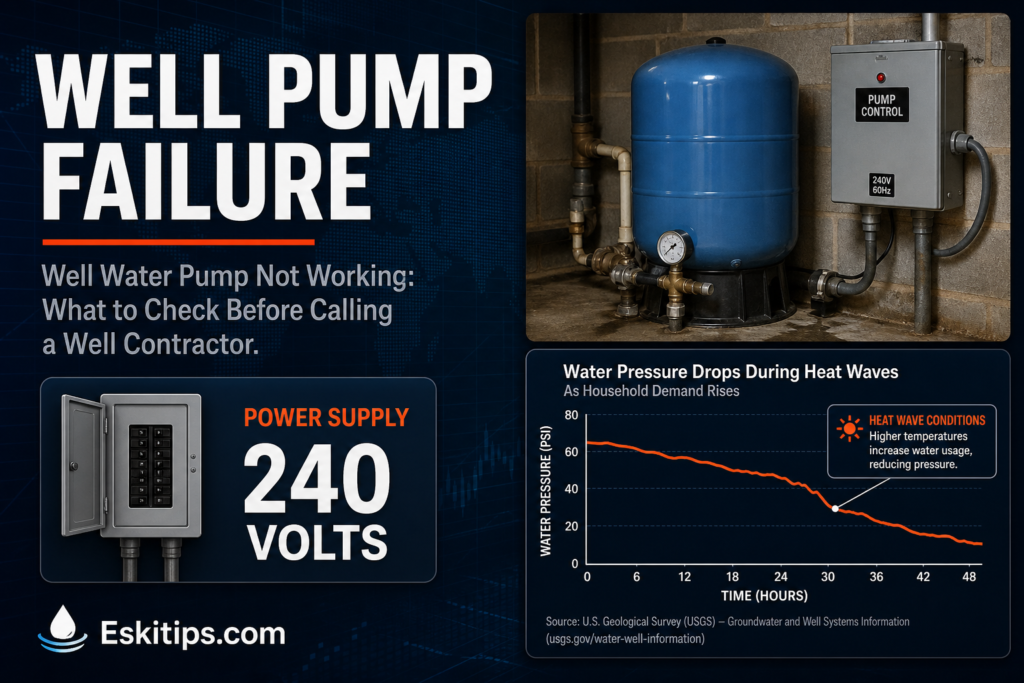
- Well pumps run on 240-volt circuits in most homes — never open the pump control box or pressure switch without confirming power is off at the breaker.
- If the pump is submersible, never attempt to pull or service it yourself; this requires specialized well equipment.
- If you smell burning near the pressure tank or control box, shut off power at the breaker and call a well contractor before doing anything else.
What to Do First
- Check the breaker for the well pump circuit — a tripped breaker is one of the simplest and most common causes and can happen during a heat wave if the pump is drawing extra current under high demand.
- Listen at the pressure tank or well house for the pump cycling on and off rapidly (short-cycling) or running continuously without building pressure — both point to different problems below.
- Check the pressure gauge near the pressure tank, if you have one. No pressure reading with the pump running suggests a lost prime or a check valve failure; normal pressure that drops quickly suggests high household demand or a leak.
- Tap or listen to the pressure tank — a waterlogged tank (one that has lost its internal air charge) sounds mostly full of water when tapped and causes the pump to short-cycle.
- Check the pressure switch (with power off) for a stuck contact or visible corrosion — a common failure point that prevents the pump from turning on at all.
- If water demand has been unusually high — new irrigation, filling a pool, extra laundry loads during a heat wave — consider whether the well’s natural recovery rate can keep up, especially in a drought year.
What Not to Do
- Do not open the pump control box or pressure switch with power still connected.
- Do not repeatedly reset a tripped breaker without investigating why it tripped — this can mask a failing pump motor.
- Do not assume low pressure is always the well running dry — check the pressure tank, switch, and breaker first, since these are far more common and far cheaper to fix.
- Do not run high-demand activities (irrigation, pool filling, laundry) simultaneously during a drought or heat wave if you’ve noticed reduced well output.
Common Well Pump Problems and What They Mean
| Symptom | Likely cause | What to do |
|---|---|---|
| Pump won’t run at all | Tripped breaker, failed pressure switch, or pump motor failure | Check breaker first; call a well contractor if it trips again or the switch looks corroded |
| Pump cycles on and off rapidly | Waterlogged pressure tank (lost air charge) | Call a well contractor to recharge or replace the tank |
| Pump runs continuously, low or no pressure | Lost prime, failed check valve, or the well level has dropped | Call a well contractor; do not let the pump run dry for extended periods |
| Water pressure gradually dropping over days | Increased household demand, seasonal well level drop, or a developing leak | Reduce simultaneous high-demand use; monitor and call a well contractor if it continues |
| Water is muddy, sandy, or discolored after a dry spell | Well drawing from lower, sediment-rich water during drought conditions | Call a well contractor to assess well depth and water table conditions |
Safe DIY Checks
- Check the breaker panel first — this takes seconds and resolves a meaningful share of “dead pump” calls.
- Look at the pressure tank’s air pre-charge sticker (if visible) and compare to your system’s cut-in pressure, though adjusting it should be left to a professional.
- Track how many fixtures and outdoor uses are running simultaneously when pressure drops — this helps a well contractor diagnose demand versus mechanical issues faster.
- Note whether the problem started right after a specific event — a lightning storm, a new irrigation zone, or an extended dry spell — since this often points directly to the cause.
When to Call a Professional
Call a licensed well contractor or pump specialist if:
- The breaker trips repeatedly after resetting.
- The pressure tank sounds waterlogged or the pump short-cycles frequently.
- The pump runs continuously without building pressure — this can burn out the motor if left unaddressed.
- Water quality changes suddenly (color, sediment, or smell), which can indicate the well level has dropped significantly.
Prevention Tips
- Have your well system inspected annually, including the pressure tank’s air charge and the pump’s amperage draw.
- Stagger high-demand water use (irrigation, laundry, pool filling) during heat waves and drought periods rather than running them simultaneously.
- Know your well’s static water level and recovery rate, especially if you live in an area with seasonal drought concerns.
- Keep the well contractor’s contact information accessible — well pump issues often need same-day attention since they affect the entire home’s water supply.
Recommended Next Step
Start with the breaker and the sound of the pressure tank — these two checks identify the cause in most cases without opening any electrical components. If the pump runs continuously without building pressure, or the breaker keeps tripping, stop resetting it and call a licensed well contractor before the pump motor is damaged further.
Related Guides
- Low Water Pressure in Whole House: What’s Causing It
- Sump Pump Not Working: What to Check
- Breaker Keeps Tripping: Causes and Safe Checks
Frequently Asked Questions
Why does my well pressure drop during a heat wave specifically?
Heat waves increase household water demand — more irrigation, more laundry, more showers — at the same time that drought conditions can lower the water table your well draws from. This combination can outpace the well’s recovery rate even when the pump itself is functioning correctly.
What does it mean if my well pump short-cycles constantly?
Rapid on-off cycling almost always points to a pressure tank that has lost its internal air charge and become waterlogged. This is a well contractor repair, not a DIY fix, since it involves draining and recharging or replacing the tank correctly.
Can I reset my well pump’s breaker myself if it trips?
Yes, resetting the breaker once is a reasonable first check. But if it trips again shortly after, stop resetting it and call a well contractor — a breaker that trips repeatedly usually indicates the pump motor is drawing excessive current, and continuing to reset it risks further damage.