What This Guide Helps With
This guide explains what a sewer backup during heavy rain means, how it differs from a single clogged drain, the safe first steps to take, and why this happens more often during intense storms and hurricane-season downpours.
Quick Answer
If multiple drains in your home back up at once during or after heavy rain — toilets, floor drains, and tubs all slow or overflow together — this points to a mainline sewer backup, not an isolated clog. Stop using all water in the house immediately, avoid flushing or running any fixture, and treat any water that comes up through a drain as contaminated sewage. Do not enter a flooded basement if the panel or outlets are near the water. Call a plumber immediately; this is not a wait-and-see problem.
Safety First
Sewage backup water is contaminated and a health hazard.
- Avoid direct contact with backup water — wear rubber boots and gloves if you must be near it, and keep children and pets away entirely.
- Do not enter a flooded area if outlets, appliances, or an electrical panel are near the water — see our basement flooding guide for the same electrical-hazard check.
- Ventilate the area if safe to do so, and wash any exposed skin thoroughly with soap and water afterward.
What to Do First
- Stop using all water in the house immediately — no flushing, no laundry, no dishwasher. Adding more water pushes the backup further and worsens the problem.
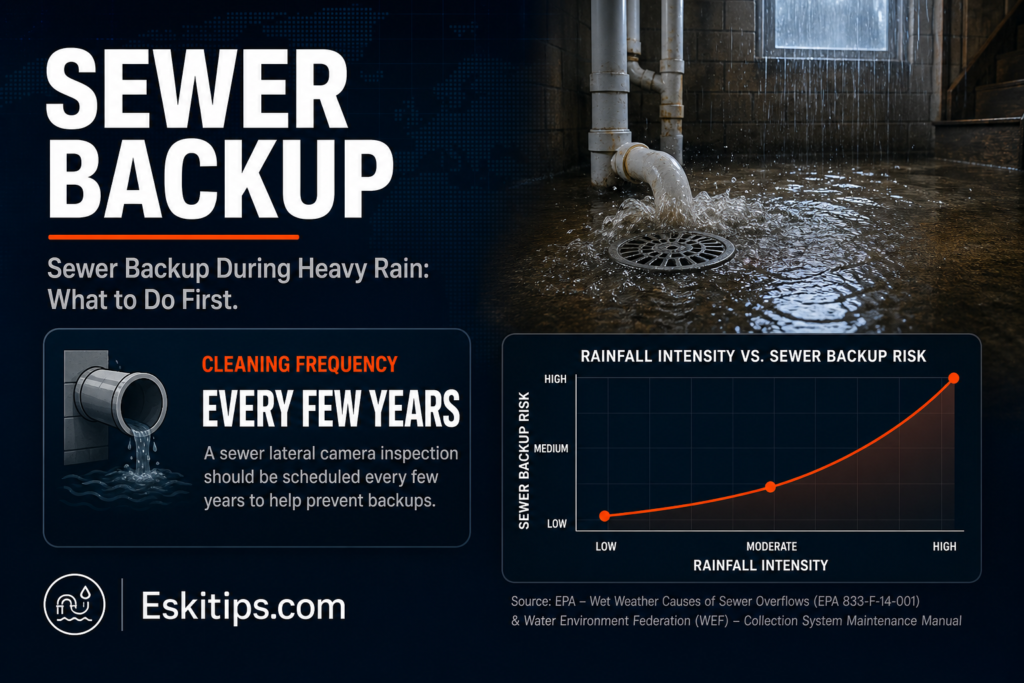
- Identify which drains are affected. A backup limited to one fixture (like a single slow toilet) is usually a local clog; multiple fixtures backing up at the same time, especially the lowest drains in the house, points to a mainline or municipal sewer issue.
- Check for a floor drain or basement fixture backing up first — this is often the lowest point in the plumbing system and the first place a mainline backup shows itself.
- Move valuables away from the affected area if it’s safe to do so without contacting the water directly.
- Photograph the situation before any cleanup, including the affected drains and the extent of the water — see our documentation checklist.
- Call a plumber immediately — sewer backups during heavy rain often affect a whole neighborhood at once during storm surges into aging municipal systems, and a plumber can confirm whether it’s a private line issue or something on the municipal side.
What Not to Do
- Do not run any water in the house — including a “test flush” — while multiple drains are backed up.
- Do not use a plunger on a backup affecting multiple drains — this is a mainline issue, and plunging a single fixture won’t help and may push contaminated water elsewhere.
- Do not touch backup water with bare skin, and do not let children or pets near the affected area.
- Do not assume it will resolve on its own once the rain stops — heavy root intrusion or a collapsed section of pipe needs a professional fix regardless of weather.
Common Causes of Rain-Related Sewer Backups
| Cause | What it usually means | What to do |
|---|---|---|
| Combined municipal sewer system overwhelmed by rain | Storm water and sewage share the same pipe, and heavy rain exceeds its capacity | Call your municipal utility to report the issue in your area |
| Tree root intrusion into the private sewer lateral | Roots have partially blocked the pipe, and rain saturation worsens the blockage | Call a plumber for a camera inspection and root removal |
| Collapsed or cracked sewer lateral | A structural pipe failure that heavy rain and saturated soil make worse | Call a plumber; this usually requires excavation or trenchless repair |
| Missing or failed backwater valve | No check valve to stop municipal sewage from pushing back into your home | Ask a plumber about installing a backwater valve after cleanup |
| Grease or debris buildup in the private line | Reduced pipe capacity that rain-driven groundwater pushes over the edge | Call a plumber for a full line cleaning |
Safe DIY Checks
- Note which drains backed up first and in what order — this detail helps a plumber locate the blockage faster.
- Check whether neighbors on the same street are experiencing the same issue during the storm — this points toward a municipal system problem rather than something specific to your home’s plumbing.
- Locate your home’s main sewer cleanout (usually a capped pipe near the foundation or in the yard) so a plumber can access it quickly.
- Check whether your home already has a backwater valve installed, which is designed specifically to prevent this kind of backup.
When to Call a Professional
Call a licensed plumber immediately if:
- Multiple drains back up at the same time, especially the lowest fixtures in the house.
- Sewage-contaminated water is present anywhere inside the home.
- The backup recurs every time it rains heavily, which points to a structural pipe issue rather than a one-time event.
Contact your municipal utility as well if you suspect the issue originates from the public sewer main rather than your private lateral line, especially if neighbors report the same problem during the same storm.
Prevention Tips
- Have a backwater valve installed on your main sewer line if you live in an area with combined sewer systems or a history of storm-related backups.
- Schedule a camera inspection of your sewer lateral every few years, especially if you have large trees near the line.
- Avoid flushing wipes, grease, or other debris that reduces pipe capacity over time.
- Know the location of your main sewer cleanout before an emergency, so a plumber can respond faster.
Recommended Next Step
If multiple drains are backing up during heavy rain, stop using water in the house and call a plumber immediately rather than waiting for the storm to pass. If this has happened more than once, ask about a backwater valve and a camera inspection of your sewer lateral — these are the two most effective long-term fixes for storm-driven backups.
Related Guides
- Sewer Smell in House but No Visible Leak
- What to Do If Your Basement Floods
- How to Document Water Damage at Home
Frequently Asked Questions
How do I know if a backup is a private clog or a municipal sewer problem?
If only one fixture is affected, it’s usually a private clog local to that line. If multiple fixtures back up at once, especially the lowest drains in the house, and neighbors report the same issue during the same storm, it more likely points to the municipal sewer main being overwhelmed.
What is a backwater valve and do I need one?
A backwater valve is a one-way valve installed on your main sewer line that allows wastewater to flow out but prevents municipal sewage from flowing back into your home during a surcharge event. It’s worth asking a plumber about if you live in an area with combined sewer systems or have experienced a rain-related backup before.
Is it safe to clean up sewage backup water myself?
Small amounts on a hard, non-porous surface can be cleaned with proper protective gear (gloves, boots, and eye protection) and disinfected thoroughly afterward. Larger volumes, backups affecting carpet or drywall, or any uncertainty about contamination extent should be handled by a professional water damage restoration company.