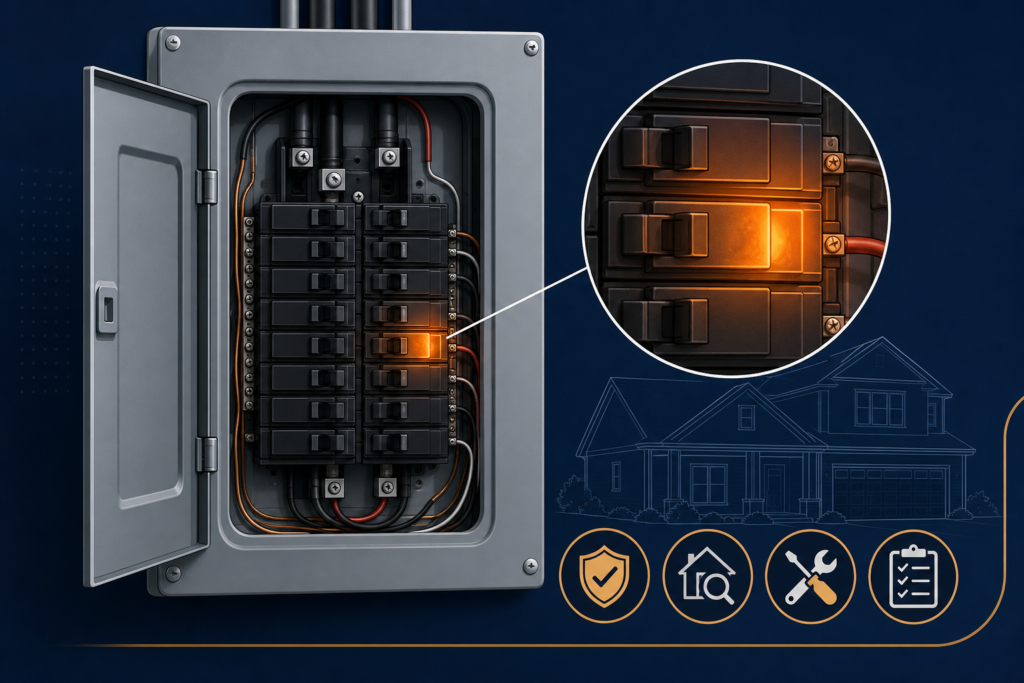
A buzzing or humming sound from your electrical panel is one of those noises that’s easy to ignore until it isn’t. Panels aren’t silent — a very faint hum from a transformer-fed system nearby is normal — but a noticeable buzz, especially one that’s new, louder than before, or paired with heat, flickering lights, or a burning smell, is your panel telling you something is wrong before it fails outright.
Normal Panel Sounds vs What Should Worry You
Electrical panels can have a very faint, steady hum from the main breaker or from nearby transformers — this is usually harmless and consistent in volume. What’s different is a buzz that’s noticeably louder than usual, that changes in pitch, that comes from one specific breaker rather than the whole panel, or that’s accompanied by any of these warning signs:
- A burning, plastic, or “hot” smell near the panel
- Warmth or heat when you hold your hand near the panel door (never touch the panel itself)
- Flickering or dimming lights on the circuit tied to the buzzing breaker
- Discoloration, scorch marks, or a slightly melted look around a breaker
- A buzz that gets louder when a specific appliance is running
Any of these combined with the buzzing sound is a signal to stop investigating yourself and call a licensed electrician — this list, not just the sound alone, is what separates “worth watching” from “shut off that circuit now.”
Common Causes of a Buzzing Breaker
| Cause | What’s Happening | Urgency |
|---|---|---|
| Loose wire connection | A wire terminal that’s vibrated loose creates arcing, which produces a buzzing sound and generates heat at the connection point | High — leading cause of panel fires |
| Overloaded circuit | A breaker carrying more load than it’s rated for can hum under strain, especially with large appliances | Medium — reduce load, monitor |
| Failing breaker | Internal components in an aging or damaged breaker can buzz as they wear out | Medium to High depending on age/condition |
| Loose bus bar connection | The bar breakers snap onto can loosen over time or from a poor original installation | High — requires professional repair |
| Faulty appliance | Sometimes the buzz originates in a plugged-in appliance, not the panel itself | Low to Medium — isolate before assuming panel issue |
How to Narrow Down the Source Safely
You can do some basic diagnosis without opening the panel cover, which should be left to a licensed electrician:
- Listen with the panel door closed. Note whether the buzz is constant or tied to a specific appliance turning on.
- Check if it’s isolated to one breaker. If you can hear the buzz is loudest near a specific labeled breaker, that circuit is the likely source — note which one, but don’t touch it.
- Unplug or turn off suspect appliances one at a time on that circuit and see if the buzz stops. If it does, the issue may be the appliance or its cord, not the panel wiring itself.
- Feel for heat from a distance — hold the back of your hand a few inches from the panel door, never touching it. Any noticeable warmth means stop and call an electrician immediately.
What you should never do: open the panel cover yourself, touch or wiggle a breaker to see if it stops buzzing, or tape/wrap anything around a warm panel. Loose connections and arcing inside a live panel are a genuine fire and shock hazard, and this is one of the few home issues where “wait and see” carries real risk.
When to Call an Electrician Immediately vs When You Can Monitor
Call immediately if you notice any smell, heat, discoloration, or a buzz that’s gotten noticeably louder over a short period. These are signs of active arcing or a connection actively failing, and panel fires typically start exactly this way — quietly, before anyone notices anything else wrong.
You can reasonably monitor (while still planning to have an electrician inspect soon) if the buzz is faint, consistent, unchanged over days or weeks, and not accompanied by any other symptom. Even in this case, an electrical panel inspection is worth scheduling — a licensed electrician can safely open the panel, torque-check every connection with a proper tool, and catch a loose terminal long before it becomes a hazard.