What This Guide Helps With
This guide explains why a toilet runs continuously or periodically refills on its own (“phantom flush”), how to diagnose the specific cause using a simple dye test, and which repairs are homeowner-safe versus which need a plumber. This is a different problem from a toilet overflowing — a running toilet wastes water quietly.
Quick Answer
A constantly running toilet is almost always one of three things: a worn flapper that no longer seals (most common), a fill valve that has failed and runs water continuously, or a float set too high that allows water to flow into the overflow tube. All three are identifiable without tools in under five minutes. The dye test tells you which one it is.
The Dye Test — Start Here
Put 10 drops of food coloring or a dye tablet into the toilet tank. Do not flush. Wait 10 to 15 minutes. Then check the toilet bowl.
- Color appears in the bowl: Water is leaking from the tank through the flapper. The flapper is not sealing.
- Color does not appear in the bowl but toilet still runs: Water is going over the overflow tube inside the tank. The float is set too high or the fill valve is failing.
Flush after the test to clear the dye.
Common Causes Table
| Cause | What you see or hear | Dye test result | Fix |
|---|---|---|---|
| Worn or warped flapper | Toilet runs continuously; hissing sound from tank | Color appears in bowl | Replace flapper — $5–10 part, homeowner DIY |
| Flapper chain too long or caught | Intermittent running; sometimes stops, sometimes not | Color may appear slowly | Adjust chain length — 1/2 inch of slack is ideal |
| Float set too high | Water sound from inside tank even without flush; water at overflow tube | No color in bowl | Adjust float down — homeowner DIY |
| Failed fill valve | Continuous hiss from tank; water at fill valve does not stop | No color in bowl or both | Replace fill valve — $15–20 part, homeowner DIY |
| Phantom flush (intermittent) | Toilet refills briefly without flushing, every 30 min to few hours | Color appears eventually | Almost always a flapper — replace it |
| Cracked overflow tube | Water sounds from inside tank, no obvious cause | Possibly both | Plumber — requires internal component replacement |
How to Look Inside the Tank
Remove the tank lid and set it somewhere safe. Inside the tank you will see:
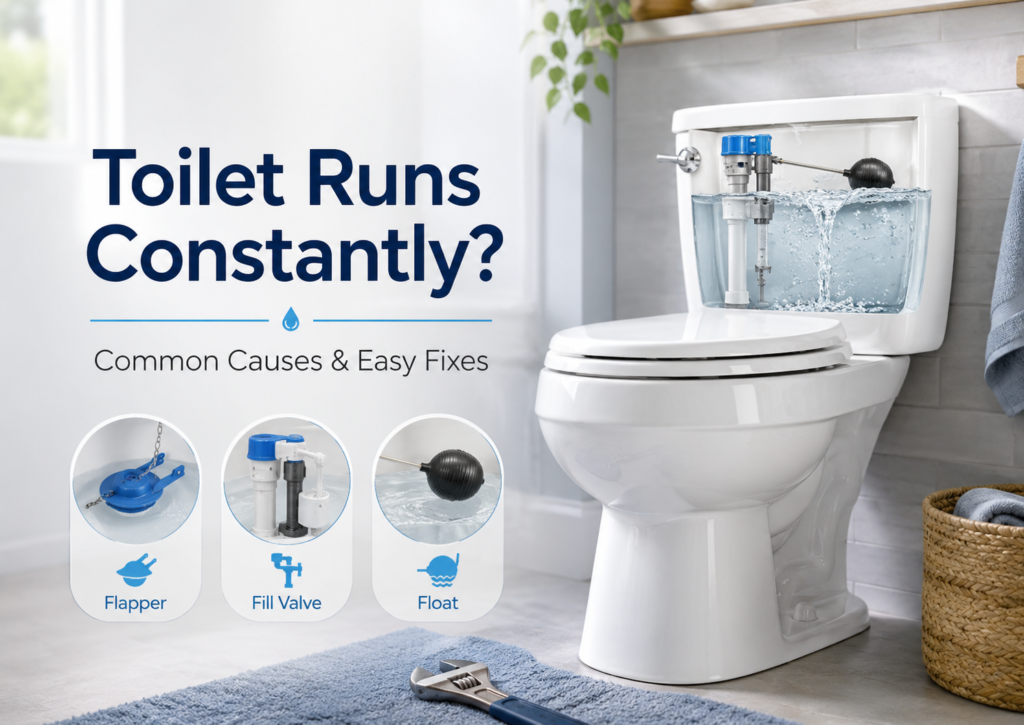
- The flapper: A rubber or silicone flap at the bottom of the tank that opens when you flush and should seal after. Old flappers warp, harden, and fail to seal.
- The overflow tube: A vertical tube in the center. If water is going into it (you will see and hear it), the float is too high or the fill valve is not shutting off.
- The float: Either a ball on an arm (older design) or a cylinder that rides up and down the fill valve column (newer). The float tells the fill valve when to stop sending water into the tank.
- The fill valve: The device connected to the water supply line, usually on the left side of the tank. It fills the tank after a flush.
What to Do: Fix a Flapper (Most Common)
- Turn off the water supply valve — the oval handle behind or under the toilet, near the floor. Turn clockwise.
- Flush to empty the tank.
- Unhook the flapper from the overflow tube ears and disconnect the chain from the flush handle arm.
- Take the old flapper to a hardware store to match it, or buy a universal flapper (most brands accept these).
- Hook the new flapper onto the overflow tube ears and attach the chain with 1/2 inch of slack.
- Turn the supply valve back on, let the tank fill, and test for running by listening and doing another dye test.
What to Do: Adjust the Float
If water is going into the overflow tube but the flapper seals:
- Ball float on arm: Bend the arm slightly downward or adjust the adjustment screw to lower the float position. The water level should be about 1 inch below the top of the overflow tube.
- Cylinder float on fill valve: Pinch the clip and slide it downward on the shaft, or turn the float adjustment screw counter-clockwise to lower the water level.
What Not to Do
- Do not add bleach tablets to the tank. They disintegrate rubber components — flappers, seals, and washers — accelerating failure. Clean the toilet bowl directly instead.
- Do not adjust the chain too short. If the chain is too short, the flapper stays partially open permanently and the toilet runs constantly. Leave 1/2 inch of slack.
- Do not ignore a running toilet. A running toilet can waste 200 gallons of water per day — a significant water bill impact over a month.
- Do not overtighten the supply valve. Hand-tight is sufficient; overtightening cracks the valve stem.
Related Guides
- Toilet Overflowing: What to Do First
- Sewer Smell in House: Finding the Source
- Plumbing & Water Systems
Safe DIY Checks
- Do the dye test to identify flapper vs float/fill valve issue.
- Look inside the tank for water going into the overflow tube.
- Check if the flapper chain is catching or is too short/long.
- Replace a worn flapper — it is a $5 to $10 part and straightforward.
- Adjust the float to lower the water level below the overflow tube top.
When to Call a Licensed Plumber
Call a plumber if:
- Replacing the flapper and adjusting the float does not stop the running.
- The fill valve makes noise and does not shut off even after adjusting.
- The toilet rocks when you sit on it — this may indicate a failed wax ring, which is a different and more serious issue.
- You see water on the floor around the toilet base.
- The toilet handle sticks in the down position — the flush valve may need replacement.
- You are uncomfortable working with the internal components after the initial inspection.
Prevention Tips
- Do the annual dye test. A slow flapper leak is common and easy to miss by sound. 10 drops of food coloring takes 2 minutes and catches it early.
- Do not use in-tank bleach or chlorine tablets. They accelerate rubber deterioration.
- When replacing the flapper, take the old one to the hardware store to match — universal flappers work in most but not all toilets.
- Plan a full flapper replacement every 5 to 7 years even if not actively failing — rubber hardens over time and causes intermittent small leaks before obvious failure.
Recommended Next Step
Do the dye test now — it takes 15 minutes and tells you exactly what to fix. If color appears in the bowl, replace the flapper. If the water level is at the overflow tube, adjust the float down. Both are homeowner-safe repairs that cost under $20 and stop significant water waste.
Frequently Asked Questions
Why does my toilet randomly refill for a few seconds every 30 minutes?
This is called phantom flush and is almost always a slow-leaking flapper. Water slowly seeps from the tank into the bowl until the tank level drops enough to trigger the fill valve to refill. The dye test will confirm it. Replace the flapper.
How much water does a running toilet waste?
A running toilet typically wastes 200 to 700 gallons of water per day depending on the severity of the leak. Over a month, that is 6,000 to 21,000 gallons — a significant addition to a water bill. Even a slow phantom-flushing toilet wastes 30 to 50 gallons per day.
Can I replace a fill valve myself?
Yes, replacing a fill valve is a homeowner-accessible repair. Turn off the water supply, flush to empty the tank, disconnect the supply line at the bottom of the tank, remove the old fill valve, and install the new one. Universal fill valves (like Fluidmaster) come with clear instructions and fit most standard tanks.
Is it okay to jiggle the handle to stop the toilet from running?
Jiggling the handle temporarily reseats a flapper that is slightly out of position. If it becomes a habit, replace the flapper — the repeated “jiggling needed” behavior means the flapper is worn and will worsen.
Does a running toilet affect water pressure elsewhere in the house?
In most homes, a running toilet does not noticeably affect water pressure at other fixtures. It does waste water and increases your water bill. However, in homes with a private well and pressure tank, a continuously running toilet can run the pressure tank down faster and may affect pressure at other fixtures.