What This Guide Helps With
This guide explains why fence posts lean or rot, how to tell whether a post can be repaired or needs full replacement, and the safe steps to assess and fix the problem before it spreads to the rest of the fence line.
Quick Answer
A leaning or rotting fence post is almost always a problem at the base, where the post meets or is buried in the ground — this is where moisture collects and wood decay starts, even if the visible part of the post above ground looks fine. A post that wobbles when pushed but shows no visible rot may just need better bracing or fresh concrete; a post that is soft, crumbly, or hollow-sounding at the base needs replacement, since patching a rotted base does not restore structural strength.
Safety First
- A badly rotted post supporting a gate or a tall privacy fence section can fail suddenly under wind load — treat a significantly leaning post as a fall hazard, not just a cosmetic issue.
- Call 811 (or your local utility locate service) before digging around a fence post, especially near a property line, to avoid hitting buried utility lines.
- Use caution with old pressure-treated lumber — wear gloves when handling older treated wood and wash hands after contact.
What to Do First
- Push the post gently from the top to check how much it moves. Significant movement at the base, more than at the top, points to a foundation or footing problem rather than just a loose rail connection.
- Dig a small inspection hole next to the post, a few inches down, to check the condition of the wood right at and just below the soil line — this is where rot almost always starts first.
- Test the wood with a flathead screwdriver by pressing it into the post at and below ground level. Solid wood resists the point; soft, spongy, or crumbling wood confirms rot has set in structurally.
- Check the concrete footing if the post is set in concrete — look for cracks, gaps between the concrete and post, or concrete that has heaved or shifted.
- Check adjacent posts along the same fence line — if soil conditions or moisture caused one post to rot, nearby posts on the same run are often not far behind.
What Not to Do
- Do not simply add more concrete around a rotted post base — this traps additional moisture against already-decayed wood and accelerates the problem rather than fixing it.
- Do not ignore a leaning post because “the fence still stands” — wind load on a leaning post increases dramatically compared to a plumb one.
- Do not reuse a rotted post by cutting off only the visibly damaged section if the rot has traveled further up inside the wood than what’s visible from outside.
- Do not dig near a post without calling 811 first if you’re unsure where utility lines run through your yard.
Common Causes of Fence Post Failure
| Cause | What it usually means | What to do |
|---|---|---|
| Wood rot at the soil line | Moisture trapped against the post where it enters the ground | Replace the post section or the full post if rot extends deep |
| Cracked or shifted concrete footing | Freeze-thaw cycles or soil movement over time | Remove old concrete and repour a proper footing |
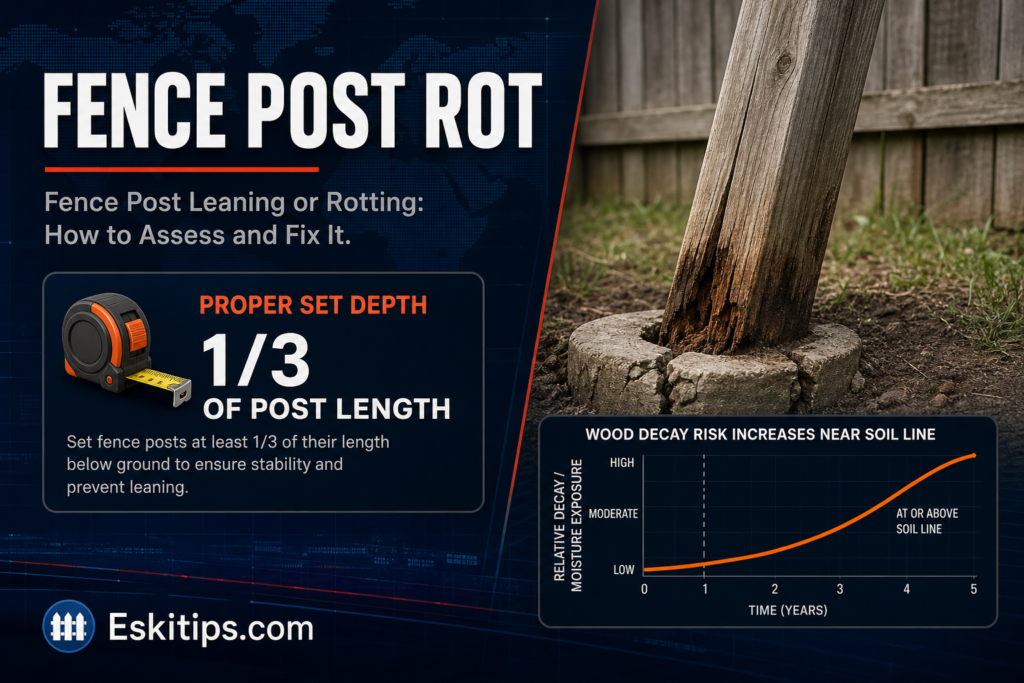
| Post set too shallow originally | Insufficient depth to resist wind load and soil movement | Reset the post at proper depth (typically one-third of above-ground height) |
| Poor drainage around the post base | Water pools against the post instead of draining away | Improve grading; consider a gravel base beneath the footing |
| Termite or insect damage | Wood-destroying insects rather than moisture rot alone | Call a pest control professional to inspect before replacing wood |
Safe DIY Checks
- Walk the entire fence line and push-test each post, not just the one that’s visibly leaning.
- Check for standing water or poor drainage around post bases after rain, which accelerates rot.
- Look for small holes, sawdust-like debris (frass), or hollow-sounding wood, which can indicate insect damage rather than simple moisture rot.
- Note whether affected posts are on the side of the fence facing prevailing wind and rain, since exposure often explains why some posts fail before others on the same line.
When to Call a Professional
Call a fencing contractor if:
- Multiple posts along the fence line show rot or movement, suggesting a systemic drainage or installation issue rather than one bad post.
- A gate post is affected, since gate posts bear more repeated stress and need a solid footing to function correctly.
- You’re unsure how deep the rot extends or whether the footing itself needs to be replaced.
Call a pest control professional if you suspect termite or wood-destroying insect activity rather than simple moisture rot, since this can affect other wood structures on the property.
Prevention Tips
- Use post bases or brackets that keep wood posts off direct ground contact when installing new fencing, which significantly reduces rot risk.
- Ensure proper drainage and grading around post footings so water doesn’t pool at the base.
- Apply a wood preservative or sealant to the below-ground portion of new wooden posts before installation.
- Inspect fence posts annually, ideally by push-testing each one, rather than waiting for visible leaning.
Recommended Next Step
Push-test the leaning post and dig a small inspection hole at the base to check for rot before deciding on a repair approach. If the wood is solid but the footing has failed, resetting the post in fresh concrete may be enough; if the wood itself is soft or crumbling at the base, plan on replacing that post rather than patching it.
Related Guides
- Deck Boards Rotting or Soft: How to Assess and What to Do
- Foundation Crack Width Chart: When to Worry
- Gutters Overflowing in Heavy Rain
Frequently Asked Questions
Can a leaning fence post be fixed without full replacement?
Yes, if the wood itself is still solid and the problem is a failed or cracked concrete footing, resetting the post with fresh concrete at the correct depth can resolve the lean. If the wood is soft or crumbling at the base, the post needs replacement since patching does not restore its structural strength.
How deep should a fence post be set in the ground?
A common guideline is roughly one-third of the post’s total length below ground, though this varies by soil type, frost depth in your region, and fence height. A post set too shallow is more prone to leaning under wind load regardless of the wood’s condition.
Why does one fence post rot while the others on the same line seem fine?
Localized drainage issues, prevailing wind and rain exposure on one side of the fence, or a difference in soil composition at that specific spot can all cause one post to rot faster than its neighbors, even if they were installed at the same time with the same materials.