Quick Answer
Deck boards that look soft, discolored, or spongy are showing signs of wood rot. A simple two-minute physical test — pressing with a flat-head screwdriver and probing along the grain — tells you whether the rot is surface-level or has penetrated deep enough to affect structural integrity. Surface rot can often be treated; deep rot in structural members requires board or post replacement and should be assessed before further deck use.
Safety First — This Is a Structural Issue
- If you are uncertain whether deck boards, joists, or posts are structurally sound, do not use the deck until assessed. A failed deck board, railing, or post can cause a fall — one of the leading causes of serious home-related injuries.
- Do not use the deck if railings flex significantly when pushed, or if deck boards give noticeably underfoot.
- Structural assessment for a deck with suspected deep rot in support posts, beams, or ledger board (the board connecting the deck to the house) should be done by a licensed contractor or structural engineer before continued use.
- Do not paint or seal over rotting wood to hide it. This traps moisture and accelerates the rot inside.
The Two-Minute Rot Assessment Test
Do this on any board that looks discolored, feels soft underfoot, or shows visible deterioration.
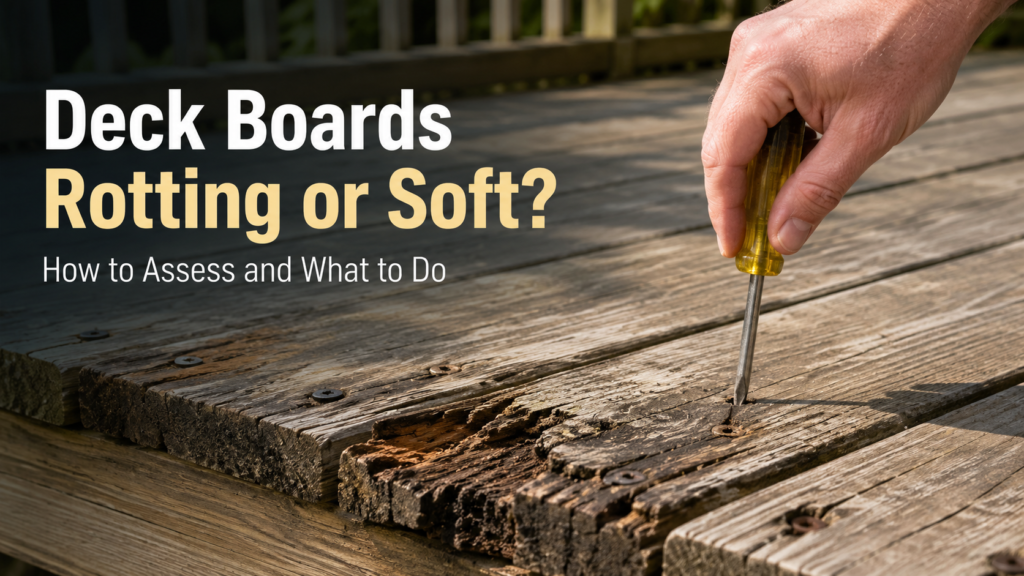
Test 1 — The Screwdriver Press Test
- Take a flat-head screwdriver with moderate handle pressure (not full force).
- Press the tip firmly into the wood grain across the board surface in multiple spots — especially at ends, near fasteners, and where water tends to pool.
- Results:
- Screwdriver resists and does not penetrate: Wood is sound.
- Screwdriver penetrates 1/8 to 1/4 inch with firm pressure: Surface rot — likely treatable.
- Screwdriver goes in 1/2 inch or deeper with light pressure: Deep rot — board should be replaced.
Test 2 — The Along-the-Grain Probe
- Insert the screwdriver tip along the grain of the wood and try to split the top layer.
- Healthy wood resists splitting and shows a clean wood color inside.
- Rotting wood splits easily, shows brown or dark discoloration inside, and may crumble.
Where to Check — Highest Risk Areas
| Location | Why it rots | What to look for |
|---|---|---|
| Board ends near posts and stairs | End grain absorbs water fastest; never fully dries | Dark discoloration, spongy feel, screwdriver penetrates easily |
| Around fasteners (screws and nails) | Water pools in fastener holes; fasteners corrode and gap | Dark rings around fastener heads; mushiness when pressed nearby |
| Where boards rest on joists | Water sits between board and joist; no airflow | Rot often hidden; inspect from below the deck if accessible |
| Post bases where they contact concrete or soil | Ground moisture wicks up; constant wet-dry cycling | Post base discoloration; crumbling wood at ground contact |
| Ledger board (where deck attaches to house) | Water traps between deck and house wall; often caulked improperly | Most serious location; rot here can affect house framing |
| Boards with poor drainage or pooling | Areas where water stands rather than drains off | Algae growth (slippery green), dark staining, soft surface |
Surface Rot vs Deep Rot — What to Do
| Condition | Screwdriver depth | Recommended action |
|---|---|---|
| Sound wood | Does not penetrate | No action; seal and maintain preventively |
| Surface rot — top 1/8 inch only | Penetrates up to 1/4 inch | Sand to clean wood; apply penetrating epoxy consolidant; reseal |
| Moderate rot — 1/4 to 1/2 inch | Moderate penetration | Consider board replacement; patch with epoxy filler for non-structural boards |
| Deep rot — over 1/2 inch | Easy deep penetration | Board replacement required; do not use epoxy on structural members |
| Structural member rot (joist, post, beam, ledger) | Any penetration | Do not use deck; contractor assessment and replacement |
What Not to Do
- Do not paint or seal over rotting wood. Paint seals moisture inside and accelerates rot underneath — the board will look fine but be structurally failing.
- Do not use epoxy filler on structural members (joists, posts, beams, ledger board) as a permanent repair. Epoxy fills cosmetically but does not restore structural load capacity.
- Do not sand and re-stain a deck without first testing all boards for rot. Staining a rotten deck wastes money and hides the deterioration.
- Do not continue using the deck if any railing post, stair stringer, or ledger board shows deep rot.
Related Guides
- Foundation Crack Width Chart: Structural Assessment
- Water Stain on Ceiling: Hidden Moisture
- Caulk Around Windows and Doors: When to Recaulk
Safe DIY Checks
- Perform the screwdriver press test on every board, especially at ends and fasteners.
- Check all railing posts at their base — press test and look for discoloration.
- Inspect the ledger board where it meets the house wall.
- Look from underneath the deck if accessible — joist condition is often better viewed from below.
- Test railings by pressing firmly side to side — any significant flex means the post or connection has failed.
When to Call a Licensed Contractor
- Any rot found in joists, beams, posts, or the ledger board.
- Railings flex or move when pressure is applied.
- Boards feel spongy underfoot in multiple locations.
- You cannot access the underside of the deck to inspect joists.
- The deck is more than 8 years old and has never been professionally assessed.
- Deck boards are being replaced and you want the structural framing evaluated at the same time.
Prevention Tips
- Apply a water-repellent sealer every 1 to 2 years. The test: pour a tablespoon of water on the deck surface. If it beads, the sealer is working. If it absorbs within 10 minutes, it is time to reseal.
- Keep debris — leaves, dirt, mulch — swept off the deck, especially in corners and between boards where it holds moisture.
- Trim back any vegetation that keeps the deck shaded and wet for extended periods.
- Ensure downspouts and drainage do not direct water onto or under the deck.
- Use stainless steel or hot-dipped galvanized fasteners — regular steel corrodes and creates rot-accelerating moisture pockets at fastener holes.
Recommended Next Step
Perform the screwdriver test on every board systematically, starting with the highest-risk locations: board ends, around fasteners, railing post bases, and the ledger board. A sound deck passes the test everywhere. Any structural member that shows penetration means stop using the deck and call a licensed contractor. For surface rot on non-structural decking boards, sand to clean wood, treat with penetrating epoxy consolidant, and seal before repainting or staining.
Frequently Asked Questions
How can I tell if wood rot is dry rot or wet rot?
Wet rot: wood feels damp, is soft and spongy, dark brown or black, may smell musty. Dry rot: wood is dry, crumbly, and brown, often with a cube-cracking pattern. Both require the rotted wood to be removed and replaced. Dry rot has a wider spread potential as the fungus can travel through wood seeking moisture.
Can I repair a rotted deck board with wood filler?
For surface rot on non-structural decking boards, penetrating epoxy consolidant followed by epoxy filler can restore the appearance and provide a paintable surface. This is a cosmetic repair for non-load-bearing boards. It should not be used on structural members (joists, posts, beams) where load capacity matters.
How long does a wood deck typically last?
With regular maintenance (sealing every 1 to 2 years, cleaning, replacing damaged boards promptly), a pressure-treated wood deck lasts 15 to 25 years. Neglected decks without sealing often show significant rot within 8 to 12 years in wet climates.
Is composite decking immune to rot?
Composite decking (wood fiber plus plastic) is highly rot-resistant but not immune to all moisture problems. The structural framing underneath — joists, posts, beams — is typically still pressure-treated wood and subject to rot if drainage is poor. Inspect the framing regardless of the deck board material.
What should I do with the area under my deck to prevent rot?
Ensure drainage paths run away from the deck and house foundation. Keep the area under the deck clear of mulch and organic debris that holds moisture against posts and beams. Some homeowners install gravel or a weed barrier under the deck to reduce ground moisture. Adequate air circulation under the deck is the most important factor.