What This Guide Helps With
This guide explains how to systematically track down a persistent musty smell in a house when it isn’t obviously coming from one specific room, and how to tell when the smell points to hidden moisture or mold rather than something that just needs cleaning.
Quick Answer
A musty smell that lingers throughout the house, rather than in one obvious spot, usually traces back to hidden moisture somewhere in the building envelope — a crawlspace, an HVAC system, behind a wall, or under flooring — rather than a surface cleaning problem. Start with the HVAC system and any crawlspace or basement, since these circulate air (and odor) throughout the whole house, before assuming the smell is coming from furniture, carpet, or a specific room.
Safety First
- A musty smell can indicate mold growth, which some individuals are more sensitive to than others — if anyone in the household has unexplained respiratory symptoms that improve when away from home, treat this as a priority to investigate.
- Do not disturb suspected mold growth aggressively (scrubbing, sanding) without containment, since this can release spores into the air.
- If you find mold covering a large area (larger than about 10 square feet), most guidance recommends professional remediation rather than DIY cleaning.
What to Do First
- Check your HVAC system first. A musty smell that’s strongest right when the system turns on often points to mold or mildew growing in the ductwork, the drip pan, or on the evaporator coil.
- Check the crawlspace or basement for standing water, high humidity, or visible mold on framing and insulation — these spaces often have the most consistent moisture problems and share air with the rest of the house more than people expect.
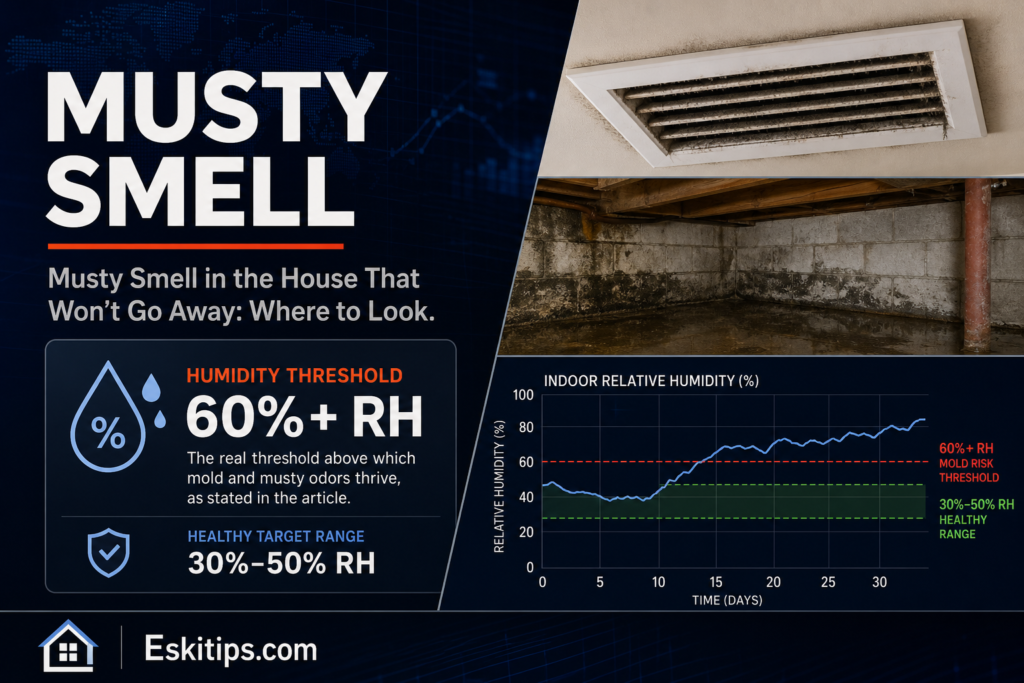
- Use a hygrometer to check indoor humidity levels in different areas of the house — readings consistently above 60% support conditions where mold and musty odors thrive.
- Check under sinks, around toilets, and near any past water damage for hidden leaks that may have gone unnoticed, especially in areas with wood flooring or drywall that can trap moisture.
- Check washing machine areas and front-load washer gaskets, which are a very common and often overlooked source of a musty smell that can carry through connected laundry room air.
- Note when the smell is strongest — after rain, when the AC first turns on, or in specific weather conditions — since timing often points directly to the source.
What Not to Do
- Do not mask the smell with air fresheners or candles before identifying the source — this delays finding an underlying moisture problem that will keep getting worse.
- Do not assume the smell is “just an old house thing” without checking humidity levels and obvious moisture sources first.
- Do not ignore a musty smell that’s stronger in one specific room — this is a useful clue, not something to dismiss as isolated.
- Do not attempt large-scale mold remediation yourself — small surface mold on a hard, non-porous surface is generally manageable, but widespread or porous-material mold needs professional handling.
Common Sources of a Persistent Musty Smell
| Where the smell is strongest | Likely source | What to do |
|---|---|---|
| Right when the HVAC system turns on | Mold or mildew in ductwork, drip pan, or evaporator coil | Have the HVAC system inspected and cleaned by a technician |
| Basement or crawlspace | High humidity or standing water in an unfinished space | Improve ventilation or dehumidification; check for leaks |
| Near the washing machine or laundry area | Mold in the washer gasket or drum, especially front-loaders | Clean the gasket and run a cleaning cycle; leave the door open between uses |
| One specific room, worse after rain | Hidden roof, window, or wall leak | Check attic and wall cavities near that room for moisture |
| Whole house, humidity consistently above 60% | General indoor humidity control problem | Add dehumidification; check HVAC sizing and ventilation |
Safe DIY Checks
- Buy an inexpensive hygrometer and check humidity levels in several rooms, the basement, and the crawlspace if accessible.
- Check your HVAC drip pan and visible ductwork sections for standing water or visible mold growth.
- Open the washing machine door between uses and periodically run an empty hot cycle with a washer-cleaning product.
- Walk the exterior of the house after rain looking for areas where water pools against the foundation, which can correlate with an interior musty smell in the room above.
When to Call a Professional
- Call an HVAC technician if the smell is strongest when the system runs, since duct and coil mold cleaning requires proper equipment and access.
- Call a mold remediation specialist if you find mold covering a large area, growing on porous materials like drywall or carpet, or if the source of moisture isn’t clear after your own checks.
- Call a roofer or contractor if the smell is localized to one room and worsens after rain, which suggests an active leak rather than general humidity.
Prevention Tips
- Keep indoor humidity between 30% and 50% using a dehumidifier if needed, especially in basements and crawlspaces.
- Schedule HVAC maintenance at least annually, including duct and coil inspection.
- Leave washing machine doors open between uses and clean the gasket regularly, especially on front-load models.
- Address any known leaks or water intrusion promptly rather than letting moisture sit and develop odor and mold over time.
Recommended Next Step
Start with the HVAC system and any basement or crawlspace, since these two areas circulate air and moisture throughout the whole house and explain most whole-house musty odors. If the smell is isolated to one room and correlates with rain, check for a hidden leak in that specific area before assuming it’s a general humidity issue.
Related Guides
- Basement Walls Sweating in Summer: Condensation or a Leak?
- Black Spots on Bathroom Ceiling: How to Tell Mold from Stain
- Bathroom Exhaust Fan Not Removing Moisture
Frequently Asked Questions
Why does my whole house smell musty even though I don’t see any mold?
Mold and mildew can grow in hidden locations like HVAC ductwork, behind walls, in crawlspaces, or inside a washing machine, producing odor that circulates through the house’s air even without visible surface growth in living spaces. Checking these hidden sources systematically usually finds the cause.
Is a musty smell always a sign of mold?
Not always, but it’s the most common cause of a persistent musty smell, since mold and mildew produce the characteristic odor as a byproduct of their growth. Ruling out HVAC, crawlspace, and appliance sources first is the most efficient way to confirm or rule out mold as the cause.
Can high indoor humidity alone cause a musty smell without active mold growth?
Yes, elevated humidity can produce a musty odor from materials absorbing moisture even before visible mold appears, and it also creates the exact conditions mold needs to start growing. Keeping indoor humidity between 30% and 50% addresses both the smell and the underlying risk.