
What This Guide Helps With
This guide explains why a house feels drafty and loses cooled air in summer even with the air conditioning running constantly, where that air is actually escaping, and the checks a homeowner can do before assuming the HVAC system itself is the problem.
Quick Answer
A “draft” in summer works in reverse from winter — instead of cold air leaking in, cooled air leaks out through the same gaps: window and door frames, electrical outlets on exterior walls, attic access points, and gaps around plumbing and duct penetrations. If the AC runs constantly but the house never quite feels cool, or one side of the house is noticeably warmer, air leakage is a strong candidate before assuming the cooling system itself is undersized or failing.
Safety First
- If you’re sealing gaps near any electrical outlet or fixture, turn off power to that circuit at the breaker before removing cover plates.
- Be cautious with foam sealants near recessed lighting or heat-generating fixtures — check the product’s rating for use near heat sources.
- If you plan to enter the attic to check for air leaks, do so during cooler morning or evening hours, since attics can reach dangerous temperatures during peak summer heat.
What to Do First
- Do a hand-check around window and door frames on a hot day — feel for warm air movement along the edges, which indicates a leak even if you can’t see a visible gap.
- Check electrical outlets and switch plates on exterior walls — these are commonly overlooked air leak points, especially in older homes without foam gaskets behind the cover plates.
- Check the attic access hatch or pull-down stairs for a proper seal — this is one of the largest and most commonly unsealed openings between conditioned living space and an extremely hot attic.
- Look at where pipes, cables, and ductwork penetrate walls or ceilings, both inside and where visible in the attic or basement — unsealed penetrations are a steady, continuous leak path.
- Check your HVAC ductwork in the attic or crawlspace for disconnected sections or visible gaps at joints — duct leakage can lose a significant share of cooled air before it ever reaches the room’s vent.
- Compare room-to-room temperature with a simple thermometer — a room consistently warmer than others, especially one with an exterior wall or attic space above it, points to a specific local leak or insulation gap.
What Not to Do
- Do not assume a warm room means your AC system is undersized before checking for air leakage and duct problems specific to that room.
- Do not seal every gap you find with the same material — foam, caulk, and weatherstripping each suit different gap types and locations.
- Do not ignore the attic hatch or pull-down stairs as an air leak source just because it’s not a window or door.
- Do not run the AC harder or lower the thermostat further as a workaround for air leakage — this increases cost without addressing the underlying loss.
Common Summer Air Leak Locations
| Location | Why it leaks | What to do |
|---|---|---|
| Window and door frames | Worn or missing weatherstripping and caulk | Replace weatherstripping; recaulk gaps — see our caulking guide |
| Electrical outlets on exterior walls | No foam gasket behind the cover plate | Install foam outlet gaskets (power off first) |
| Attic access hatch or pull-down stairs | Rarely sealed or insulated by default | Add weatherstripping and an insulated cover box |
| Pipe, cable, and duct penetrations | Gaps left open during original construction or renovations | Seal with appropriate caulk or expanding foam |
| Disconnected or leaking ductwork | Joints separate or seals degrade over time in attics/crawlspaces | Have ductwork inspected and resealed by an HVAC technician |
Safe DIY Checks
- Hold a lit incense stick or a piece of tissue near suspected gaps on a windy day — visible movement confirms an active air leak.
- Check and replace worn weatherstripping around exterior doors, which degrades faster than most homeowners expect.
- Look at the attic hatch from inside the attic for daylight gaps around its frame.
- Compare your utility bills or thermostat run-time to previous summers — a noticeable increase without other changes can point to worsening air leakage.
When to Call a Professional
- Call an HVAC technician if you suspect significant duct leakage in the attic or crawlspace — proper sealing often requires mastic or specific duct sealing materials, not just tape.
- Call an energy auditor for a blower door test if leaks aren’t obvious from a hand-check but your cooling bills or comfort levels suggest ongoing air loss.
- Call an insulation contractor if attic insulation appears thin, compressed, or missing in specific areas, since this compounds any air leakage problem.
Prevention Tips
- Replace weatherstripping on exterior doors every few years, or sooner if you can feel air movement around the frame.
- Add an insulated cover or weatherstripping to the attic access hatch as a one-time, low-cost improvement.
- Have ductwork inspected and sealed periodically, especially in homes with attic-run ducts exposed to extreme summer heat.
- Consider a professional energy audit if room-to-room temperature differences persist despite other fixes.
Recommended Next Step
Start with a hand-check around windows, doors, outlets, and the attic hatch on a hot day to find where cooled air is actually escaping. If duct leakage in the attic or crawlspace seems likely based on room-to-room temperature differences, have an HVAC technician inspect and seal the ductwork before assuming the cooling system itself needs replacement.
Related Guides
- Caulk Around Windows and Doors Cracking
- Attic Too Hot in Summer: Why It Happens and What to Do
- AC Running but Not Cooling: Causes and Safe Checks
Frequently Asked Questions
Can air leaks really make a difference if my AC is running constantly anyway?
Yes, air leakage means the system has to run longer and harder to maintain temperature because cooled air is continuously escaping and being replaced by warm outdoor air. Sealing leaks reduces this workload, which can improve both comfort and cooling costs even without any change to the AC equipment itself.
Is the attic access hatch really a significant source of air leakage?
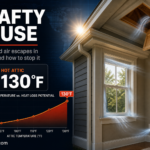
Yes, it’s one of the most commonly overlooked large openings between conditioned living space and an attic that can reach well over 130°F in summer. An unsealed or poorly insulated hatch allows a surprising amount of heat transfer and air exchange compared to its relatively small size.
How can I tell if my ductwork is leaking without opening up the attic?
Signs include specific rooms that are consistently warmer than others fed by the same system, visibly higher utility bills without other explanation, or a musty or dusty smell coming from vents. A definitive check usually requires an HVAC technician to inspect accessible duct sections directly.