Quick Answer
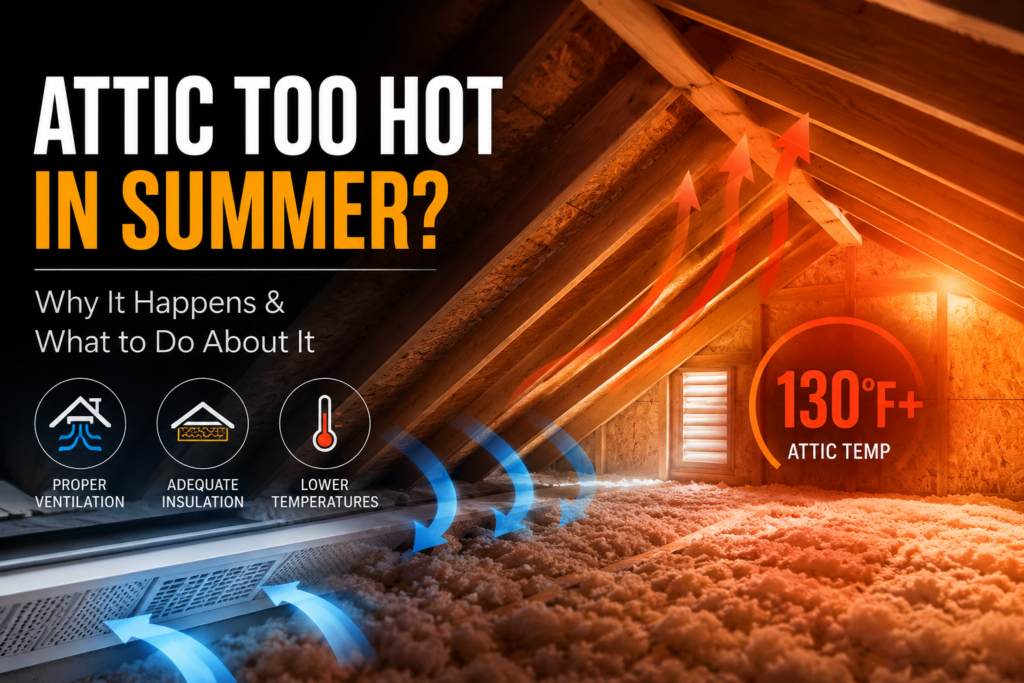
An attic that gets extremely hot in summer — often 130°F or higher — is almost always a ventilation problem, an insulation problem, or both. A hot attic radiates heat down into living spaces, makes upstairs rooms unbearable, forces the AC to run constantly, and shortens the life of the roof. The fix is improving attic airflow (intake and exhaust ventilation) and ensuring adequate insulation on the attic floor.
Why a Hot Attic Matters Beyond Comfort
- Upstairs rooms become uncomfortable because heat radiates down through the ceiling.
- The air conditioner runs longer and harder, increasing energy bills, especially if ductwork runs through the hot attic.
- Excessive attic heat ages roof shingles from underneath, shortening roof life.
- Trapped moisture in a poorly ventilated attic creates conditions for mold and wood deterioration.
A well-ventilated attic should not exceed about 100 to 110°F when the outdoor temperature is 90°F. If your attic is significantly hotter, ventilation is inadequate.
Safety First
- Do not enter an attic during the hottest part of a summer day. Attic temperatures can exceed 130°F, which is dangerous. Inspect in early morning when temperatures are lower.
- Step only on the joists or on installed decking — stepping between joists on the ceiling drywall will put your foot through the ceiling and risks a fall.
- Use a flashlight and watch for exposed wiring, nails protruding from the roof deck, and low clearance.
- If you find signs of electrical issues, knob-and-tube wiring, or vermiculite insulation (which may contain asbestos), do not disturb it and consult a professional.
How Attic Ventilation Works
Proper attic ventilation requires two things working together: intake vents (low, at the soffits/eaves) and exhaust vents (high, at the ridge or near the peak). Cool air enters at the soffits, rises as it heats, and exits at the ridge — a continuous convection flow that carries heat out. If either intake or exhaust is missing or blocked, the system does not work.
| Ventilation component | Location | Common problem |
|---|---|---|
| Soffit vents (intake) | Under the eaves, low on the roof | Blocked by insulation pushed against them |
| Ridge vent (exhaust) | Along the roof peak | Missing, or installed without matching soffit intake |
| Gable vents | In the gable end walls | Insufficient alone; can short-circuit ridge vents |
| Roof/box vents (exhaust) | Near the roof peak | Too few for the attic size |
| Powered attic fan | Roof or gable mounted | Can pull conditioned air from the house if soffits are inadequate |
What to Check First
- Check the soffit vents from outside. Look up under the eaves. Are there vents? Are they painted over, clogged with debris, or blocked?
- Check soffit vents from inside the attic. In the early morning, look where the roof meets the attic floor at the eaves. Insulation pushed against the underside of the roof deck blocks airflow from the soffits. You should see baffles (channels) keeping insulation away from the vents.
- Check for exhaust ventilation. Is there a ridge vent along the peak, or roof vents near the top? Feel for air movement on a breezy day.
- Measure the attic temperature. Place a thermometer in the attic and check it during peak afternoon heat. Compare to the outdoor temperature.
- Check insulation depth. Inadequate insulation on the attic floor lets heat radiate into living spaces and lets conditioned air escape. Most climates need R-38 to R-60 (roughly 12 to 20 inches of insulation depth depending on type).
The Most Common Mistake: Blocked Soffit Vents
When insulation is added to an attic floor, it is often pushed too far toward the eaves, covering and blocking the soffit intake vents. This stops the entire ventilation cycle — there is exhaust at the top but no intake at the bottom, so no airflow. Installing baffles (foam or cardboard channels) at each rafter bay keeps insulation back and maintains the air channel from the soffit. This is one of the most common and most fixable attic ventilation problems.
What Not to Do
- Do not add a powered attic fan without confirming adequate soffit intake. A powered fan with insufficient intake pulls air-conditioned air up from the living space through ceiling gaps — increasing your cooling bill rather than reducing it.
- Do not block soffit vents with insulation. Use baffles to keep the air channel open.
- Do not assume gable vents alone provide adequate ventilation — they often do not move enough air for the attic volume.
- Do not mix ridge vents with gable vents or powered fans without understanding airflow — they can short-circuit each other, pulling air from the nearest opening rather than from the soffits.
- Do not enter the attic during peak afternoon heat — wait for cooler morning hours.
Related Guides
- AC Running But Not Cooling: Attic Heat Connection
- Window AC Unit Dripping Water Inside
- Ice Dams: The Winter Version of an Attic Heat Problem
Safe DIY Checks
- Inspect soffit vents from outside for blockage or paint-over.
- Check inside the attic (early morning) for insulation blocking the soffits.
- Confirm exhaust ventilation exists at or near the ridge.
- Measure attic temperature during peak heat vs outdoor temperature.
- Check insulation depth on the attic floor.
- Install baffles if insulation is blocking soffit airflow.
When to Call a Professional
- The attic has exhaust venting but no soffit intake, requiring soffit vents to be cut in — a roofing or contractor job.
- Insulation needs significant upgrading to reach recommended R-values.
- You find signs of moisture, mold, or roof deck deterioration in the attic.
- Ductwork in the attic is leaking conditioned air — an HVAC professional should seal and insulate it.
- You are considering a powered attic fan, radiant barrier, or ridge vent installation — proper sizing and balance matter.
Prevention and Improvement Tips
- Keep soffit vents clear — check that insulation has not been pushed against them.
- Ensure a balanced ventilation system: roughly equal intake (soffit) and exhaust (ridge) area.
- Upgrade attic floor insulation to the recommended R-value for your climate — this reduces both summer heat gain and winter heat loss.
- Seal attic floor air leaks (around light fixtures, plumbing, ductwork) to stop conditioned air from escaping upward.
- Consider a radiant barrier in very hot climates — it reflects radiant heat away from the attic space.
Recommended Next Step
Check your soffit vents first — both from outside and from inside the attic in the early morning. Blocked soffit intake is the single most common cause of a superheated attic, and installing baffles to clear the air channel is an accessible fix. Then confirm you have exhaust ventilation at the ridge and adequate insulation depth. For cutting in new vents or major insulation work, a contractor is the right call.
Frequently Asked Questions
How hot should my attic get in summer?
A well-ventilated attic should stay within about 10 to 20 degrees of the outdoor temperature — so roughly 100 to 110°F when it is 90°F outside. Attics reaching 130°F or higher have inadequate ventilation. The bigger the gap between attic and outdoor temperature, the worse the ventilation.
Will a powered attic fan cool my attic?
Only if there is adequate soffit intake to feed it. Without enough intake, a powered fan pulls air-conditioned air from your living space up through ceiling gaps — costing you more in cooling than it saves. Passive ridge-and-soffit ventilation is often more effective and has no operating cost. Confirm intake before installing a powered fan.
Does attic insulation make the attic hotter?
Insulation on the attic floor keeps heat out of the living space below, which can make the attic itself slightly hotter — but that is the point. The insulation is a barrier between the hot attic and your cool living space. The heat is then removed by ventilation. Insulation and ventilation work together: insulation blocks heat transfer, ventilation removes the heat.
What is a radiant barrier and does it help?
A radiant barrier is a reflective foil installed in the attic (under the roof decking or on the rafters) that reflects radiant heat rather than absorbing it. In hot, sunny climates it can meaningfully reduce attic temperatures and cooling costs. It is most effective in combination with good ventilation and insulation, not as a standalone fix.
Can a hot attic damage my roof?
Yes. Excessive attic heat ages asphalt shingles from underneath, causing them to become brittle and lose granules faster. Poor ventilation also traps moisture, which deteriorates the roof decking and framing over time. Proper attic ventilation extends roof life — many shingle warranties actually require adequate ventilation.