What This Guide Helps With
This guide explains how wildfire smoke gets into a home even with windows and doors closed, how to protect indoor air quality during a smoke event, and which filtration steps actually make a measurable difference versus which ones don’t.
Quick Answer
Wildfire smoke enters homes through small gaps around windows and doors, HVAC fresh-air intakes, exhaust fans, and even small cracks in the building envelope — a home does not need an open window for smoke to get inside during a heavy smoke event. Close windows and doors, switch your HVAC system to recirculate mode (not fresh air intake), run a high-efficiency air filter in your HVAC system or a portable HEPA air purifier, and avoid activities that add more particulates indoors, like frying food, burning candles, or vacuuming with a non-HEPA vacuum.
Safety First
- Anyone with asthma, COPD, heart disease, or who is pregnant, elderly, or very young should take smoke advisories especially seriously and consider limiting outdoor exposure entirely during heavy smoke days.
- Do not rely on a cloth or surgical mask to filter smoke particles — these do not block the fine particulate matter (PM2.5) in wildfire smoke. An N95 or better respirator is needed for outdoor exposure during heavy smoke.
- If anyone in the household experiences difficulty breathing, chest pain, or severe coughing during a smoke event, seek medical attention rather than waiting it out.
What to Do First
- Close all windows and doors and seal obvious gaps with a rolled towel or weatherstripping if smoke smell is noticeable indoors.
- Set your HVAC system to recirculate mode rather than pulling in fresh outdoor air, if your system has this option — many central systems draw in some outdoor air by default.
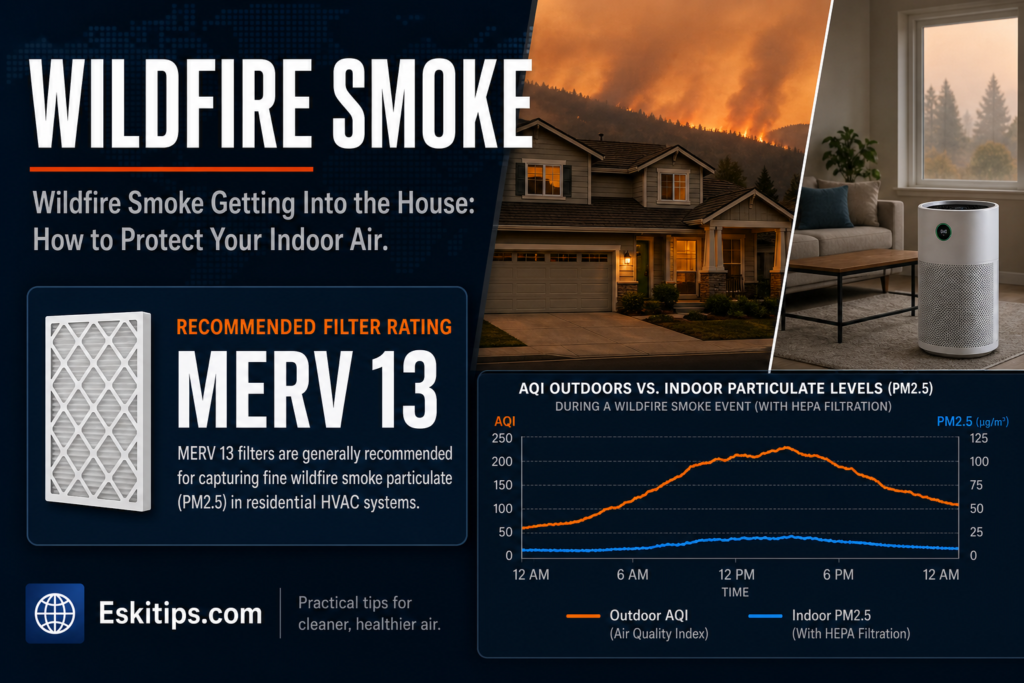
- Upgrade your HVAC filter to the highest MERV rating your system supports (usually MERV 13 for residential systems) without restricting airflow too much for your equipment — check your system’s manual or ask an HVAC technician which rating is safe for your unit.
- Run a portable HEPA air purifier in main living areas and bedrooms, sized appropriately for the room’s square footage, for the most direct improvement in indoor particulate levels.
- Avoid adding indoor particulates — skip frying, broiling, candles, and incense, and avoid vacuuming with a non-HEPA vacuum, which can stir up settled particles.
- Check your local air quality index (AQI) regularly during an active smoke event, since conditions can change significantly within hours as wind direction shifts.
What Not to Do
- Do not run exhaust fans (bathroom, kitchen range hood venting outside) more than necessary during heavy smoke — these can pull additional outdoor smoke into the home through other gaps to replace the exhausted air.
- Do not assume closed windows alone are enough — most homes have enough natural air leakage that smoke odor and particulates still enter without additional filtration.
- Do not use an ozone-generating “air purifier” — these can produce harmful ozone gas rather than genuinely filtering particulates; look specifically for HEPA filtration.
- Do not exercise vigorously outdoors or leave windows open overnight for “fresh air” during an active smoke advisory, even if the smell seems to have faded temporarily.
How Smoke Enters and What Helps
| Entry point | Why it matters | What to do |
|---|---|---|
| Gaps around windows and doors | Even closed windows leak some air through worn weatherstripping | Check and replace worn weatherstripping before smoke season |
| HVAC fresh-air intake | Some systems draw a percentage of outdoor air by default | Switch to recirculate mode if your system allows it |
| Bathroom and kitchen exhaust fans | Running these can pull in outdoor smoke to replace exhausted air | Limit use to only what’s necessary during active smoke events |
| Low-MERV HVAC filter | Standard filters catch large particles but not fine smoke particulate | Upgrade to the highest MERV your system safely supports |
| Indoor activities generating particulates | Frying, candles, and non-HEPA vacuuming add to indoor particulate load | Avoid or minimize during active smoke advisories |
Safe DIY Checks
- Check your HVAC filter’s current MERV rating and confirm whether your system can handle a higher-rated filter without restricting airflow.
- Inspect weatherstripping around exterior doors and windows for gaps, especially ones you can see daylight through.
- Check whether your thermostat or HVAC control has a “fresh air” or “recirculate” setting, and confirm which one is currently active.
- Monitor your local air quality index using a trusted government source during any regional smoke event.
When to Call a Professional
- Call an HVAC technician if you’re unsure whether your system can safely run a higher-MERV filter without restricting airflow or straining the blower motor.
- Seek medical attention for anyone experiencing breathing difficulty, chest tightness, or severe coughing during a smoke event, especially those with existing respiratory or cardiac conditions.
- Consider consulting an energy auditor about broader air-sealing improvements if your home consistently lets in smoke odor during regional events, which often points to broader building envelope leaks.
Prevention Tips
- Keep a portable HEPA air purifier and a stock of appropriately rated HVAC filters on hand before wildfire season begins in your region, since supplies often sell out during active events.
- Seal and weatherstrip doors and windows as routine home maintenance, not just in response to a smoke event.
- Sign up for local air quality alerts so you know when to switch to recirculate mode before smoke levels peak, not after.
- Keep N95 or better respirators on hand for anyone who must go outside briefly during an active smoke advisory.
Recommended Next Step
Before the next smoke event reaches your area, check your HVAC system’s filter rating and recirculate setting, and have a portable HEPA purifier ready for bedrooms and main living spaces. During an active event, keep windows and doors closed, limit exhaust fan use, and avoid adding indoor particulates through cooking or candles until the local air quality index improves.
Related Guides
- Attic Too Hot in Summer: Why It Happens and What to Do
- Basement Walls Sweating in Summer: Condensation or a Leak?
- Caulk Around Windows and Doors Cracking
Frequently Asked Questions
Do closed windows really stop wildfire smoke from getting inside?
Closed windows help significantly but don’t fully seal a home, since most houses have enough natural air leakage through gaps, vents, and worn weatherstripping for smoke odor and fine particulates to still enter during a heavy regional smoke event.
What MERV rating filter is best for wildfire smoke?
MERV 13 is generally recommended for capturing fine wildfire smoke particulate in residential HVAC systems, but not every system can handle this rating without restricting airflow. Check your system’s specifications or ask an HVAC technician before upgrading.
Are portable air purifiers actually effective against wildfire smoke?
Yes, a properly sized HEPA air purifier is one of the most effective single steps for reducing indoor particulate levels during a smoke event, particularly in bedrooms and main living areas where people spend the most time.