What This Guide Helps With
This guide explains why a pool pump stops working or loses suction, the safe checks a homeowner can do before calling a pool professional, and why this problem becomes more common during peak summer use.
Quick Answer
A pool pump that won’t turn on, hums without starting, or runs but doesn’t circulate water most commonly has one of these causes: a tripped breaker or GFCI, a clogged skimmer or pump basket restricting flow, air entering the system through a loose lid or fitting (losing prime), or a seized motor bearing. A pump that runs but the water isn’t circulating well is a different problem from one that won’t start at all, and each points to a different fix.
Safety First
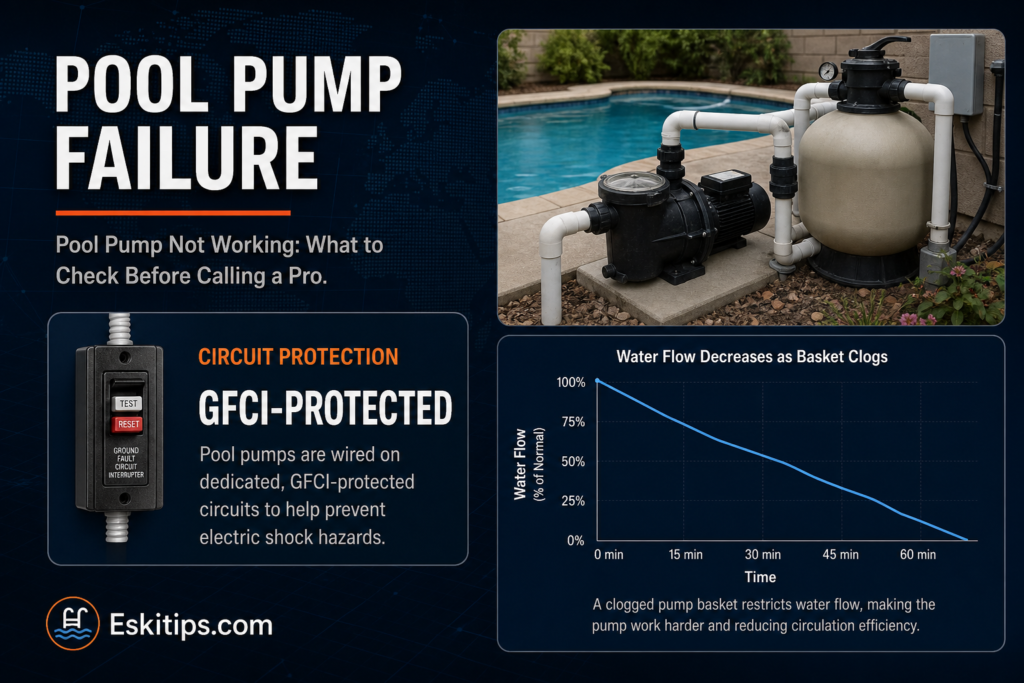
- Pool pumps are wired on dedicated, GFCI-protected circuits — never open the motor housing or wiring compartment without confirming power is off at the breaker.
- Never operate a pool pump with the pump lid or basket cover missing or cracked — this creates both an electrical and a suction entrapment hazard.
- If the pump motor is hot to the touch, smells like burning, or the breaker trips immediately on reset, stop and call a pool professional before continuing.
What to Do First
- Check the breaker and GFCI for the pool equipment circuit — pool pumps commonly trip a GFCI during heavy storm activity or after any moisture intrusion into the wiring.
- Check the pump basket and skimmer baskets for debris. A clogged basket is the single most common cause of reduced flow or a pump that struggles to prime, especially during peak summer when leaves, bugs, and sunscreen residue build up faster.
- Look at the pump lid O-ring and lid seal for cracks or a loose fit — air leaking in here prevents the pump from holding prime even if the motor runs fine.
- Listen to the motor. A humming sound with no rotation often points to a seized bearing or a capacitor failure — this is a professional repair, not a DIY fix.
- Check the water level in the pool — a level that has dropped below the skimmer opening causes the pump to suck air instead of water, especially after a hot, high-evaporation week.
- Check the pressure gauge on the filter (if present) — unusually high pressure suggests a filter needing cleaning or backwashing, which restricts flow even with a healthy pump.
What Not to Do
- Do not run the pump with the basket lid missing, cracked, or not fully sealed.
- Do not repeatedly reset a tripped GFCI without checking for the cause — repeated tripping usually means a real ground fault, often from a wet or degraded wire connection.
- Do not ignore a pool water level that has dropped below the skimmer — running the pump while it sucks air can damage the seal and shorten the motor’s life.
- Do not attempt to open the motor housing or replace a capacitor yourself unless you are trained in this specific repair — pool pump capacitors can hold a charge even when unplugged.
Common Pool Pump Problems and What They Mean
| Symptom | Likely cause | What to do |
|---|---|---|
| Pump won’t turn on at all | Tripped breaker/GFCI, or a failed motor | Check breaker first; call a pool professional if it trips again |
| Pump hums but doesn’t spin | Seized bearing or failed start capacitor | Turn off power; call a pool professional for motor repair |
| Pump runs but low or no flow at the pool | Clogged basket, dirty filter, or lost prime from an air leak | Clean baskets and filter; check lid seal for air leaks |
| Pump loses prime repeatedly | Cracked lid O-ring, low water level, or a suction-side air leak | Replace the O-ring; confirm pool water level covers the skimmer |
| Pump is unusually loud or vibrating | Worn bearings or debris caught in the impeller | Call a pool professional before the motor fails completely |
Safe DIY Checks
- Empty and rinse the pump basket and skimmer baskets weekly during peak summer use, more often after storms or high wind.
- Check the pool water level daily during a heat wave — evaporation increases significantly, and a low level is one of the most overlooked causes of pump problems.
- Inspect the pump lid O-ring for cracking or a dry, brittle appearance and replace it as routine maintenance, not just when a problem appears.
- Note the filter pressure gauge reading when the system is running well, so you have a baseline for spotting a clogged filter later.
When to Call a Professional
Call a licensed pool professional if:
- The breaker or GFCI trips again after resetting once.
- The motor hums without spinning, or is hot, loud, or vibrating.
- The pump loses prime repeatedly even after cleaning baskets and checking the lid seal.
- You suspect a suction-side leak in buried plumbing rather than at the visible pump components.
Prevention Tips
- Clean pump and skimmer baskets on a consistent schedule through peak summer, not just when flow noticeably drops.
- Monitor and maintain pool water level, especially during extended heat waves when evaporation accelerates.
- Replace the pump lid O-ring annually as preventive maintenance — it’s inexpensive compared to the flow problems a failed seal causes.
- Have the pump motor and electrical connections inspected each spring before the pool season ramps up.
Recommended Next Step
Start with the breaker, then the baskets, then the lid seal — these three checks resolve the majority of pool pump flow problems without opening the motor. If the motor hums without turning, feels hot, or trips the breaker repeatedly, stop troubleshooting further yourself and call a licensed pool professional before the motor is damaged beyond repair.
Related Guides
- Low Water Pressure in Whole House: What’s Causing It
- Sprinkler Zone Not Working: What to Check Before Calling
- Breaker Keeps Tripping: Causes and Safe Checks
Frequently Asked Questions
Why does my pool pump keep losing prime?
Losing prime usually means air is entering the suction side of the system rather than the pump drawing only water. The most common causes are a low pool water level below the skimmer opening, a cracked or poorly seated pump lid O-ring, or a loose union fitting on the suction line.
Is it normal for a pool pump to run all day during a heat wave?
Many pool professionals recommend longer daily run times during extreme heat to keep up with faster chemical breakdown and algae growth, but the pump should still cycle normally rather than struggling, humming, or overheating. If it seems to be working harder than usual for the same run time, check the filter and baskets first.
Can a clogged filter really stop water flow even if the pump motor is fine?
Yes. A heavily clogged filter creates enough back pressure to significantly restrict flow throughout the system, even when the pump motor itself is running normally. Checking the filter pressure gauge against your baseline reading is the fastest way to catch this before it strains the motor.