
What This Guide Helps With
This guide ranks clogged shower drain solutions by what actually works — for hair clogs, soap buildup, and deeper blockages — and explains which common approaches waste time or make the problem worse. The right method depends on where the clog is and what it is made of.
Quick Answer
For a clogged shower drain, a plastic drain snake (hair snake) pulled through the drain opening clears the vast majority of shower clogs in under 5 minutes at a cost of $3 to $5. Chemical drain cleaners are slower, damage pipes over time, and fail on hair clogs. Boiling water is ineffective and can damage PVC. The plastic drain snake is the right first tool. Here is what works and what does not.
Where Is the Clog?
The method depends on where the clog is located.
| Symptom | Likely clog location | Best first method |
|---|---|---|
| Water drains very slowly but eventually clears | Partial clog near drain opening, usually hair and soap | Drain snake or drain hook — remove the clog by hand |
| Standing water, does not drain at all | Full blockage at or just below drain | Drain snake first; plunger if snake fails |
| Multiple drains slow at the same time | Blockage in main line, not the shower specifically | Do not snake — call a plumber |
| Water backs up in other drains when shower runs | Main line issue or venting problem | Call a plumber |
| Gurgling from drain after water clears | Partial blockage or vent stack issue | Snake the drain; if gurgling continues, plumber |
Method Ranking — What Actually Works
1. Plastic Drain Snake / Hair Clog Remover (Best First Choice)
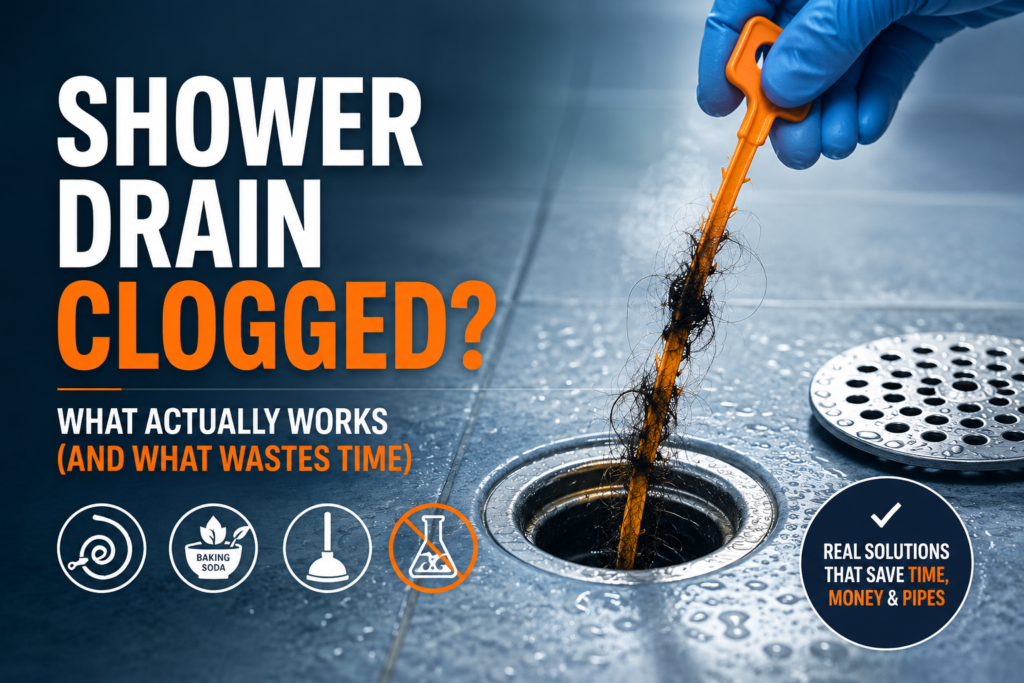
A flexible plastic strip with barbs along its length. Insert it into the drain, twist slightly, and pull out. Hair wraps around the barbs and comes out in a clump. This is the most effective method for shower drains because shower clogs are almost always hair and soap buildup caught 2 to 6 inches inside the drain.
- Cost: $3 to $8 at any hardware store
- Time: Under 5 minutes
- Works on: Hair clogs, which are the overwhelming majority of shower drain problems
- Safe for: All pipe types including PVC and ABS
- Requires: Removing the drain cover (usually one screw, or it pops off)
2. Baking Soda + Vinegar (Effective for Mild Soap Buildup)
Pour 1/2 cup of baking soda into the drain. Follow immediately with 1/2 cup of white vinegar. Cover the drain opening with a cloth or drain cover to direct the reaction downward. Wait 20 to 30 minutes. Flush with hot (not boiling) water. This is effective for soap scum and light buildup but does not break up or remove hair clogs.
3. Plunger (For Solid Blockages After Snake)
Use a cup plunger (not a flange plunger — that is for toilets). Seal the plunger over the drain, add enough water to cover the cup, and plunge with firm vertical strokes. This works for blockages where something solid or compacted is lodged. It does not pull out hair — it pushes it. This can compact a hair clog further.
4. Drain Cleaning Enzyme Products (Ongoing Maintenance Only)
Enzyme-based drain maintainers work over 8 to 24 hours to break down organic matter. They work well as a monthly preventive treatment but are too slow for active clogs. They do not damage pipes and are safe for regular use.
5. Chemical Drain Cleaners — Use With Caution
Chemical drain cleaners (lye or sulfuric acid based) generate heat that can soften PVC and rubber pipe fittings. They do not dissolve hair well — they weaken it, but hair clogs often survive and the chemical sits in the trap. They also damage pipe seals over repeated use. Use them only as a last resort before calling a plumber, and never mix different drain cleaner products or use after a failed enzyme treatment.
Step-by-Step: Clearing the Typical Shower Hair Clog
- Remove the drain cover. Unscrew the screw in the center of the cover, or use a flat screwdriver to pop it up. Some covers twist counter-clockwise.
- Look inside with a flashlight. Hair and soap buildup is usually visible 2 to 4 inches down from the drain opening.
- Insert the plastic drain snake. Push it down as far as it will go, rotate slightly, and slowly pull it back up. Hair wraps around the barbs.
- Remove the clog. Dispose of what comes out — it is mostly hair bound in soap residue.
- Repeat 2 to 3 times. Clogs often come out in multiple passes.
- Flush with hot water for 30 seconds.
- Replace the drain cover.
What Not to Do
- Do not pour boiling water into a PVC drain. Temperatures above 140°F can soften PVC joints and cause leaks at connections.
- Do not mix chemical drain cleaners. Combining products can cause violent reactions.
- Do not use a chemical cleaner and then call a plumber without telling them — the professional will encounter the chemical when snaking the drain.
- Do not repeatedly plunge a shower drain to try to force a hair clog through. Hair clogs compact and become harder to remove.
- Do not ignore a clog that affects multiple drains — this is a main line issue, not a shower drain issue, and requires a plumber.
- Do not ignore a slow drain for months. Partial clogs grow and become complete blockages, often at inconvenient times.
Related Guides
- Sewer Smell in House: Dry P-traps and Drain Issues
- Toilet Runs Constantly: Diagnosis Guide
- Plumbing & Water Systems
Safe DIY Checks
- Confirm whether only one drain is slow (local clog) or multiple drains (main line issue).
- Remove the drain cover and look inside with a flashlight.
- Use a plastic drain snake first — it resolves most shower clogs in minutes.
- Follow with baking soda and vinegar for soap residue if hair is removed but flow is still slow.
- Flush with hot (not boiling) water after any treatment.
When to Call a Licensed Plumber
Call a plumber if:
- Multiple drains in the home are slow simultaneously.
- Water backs up in other drains (sink, toilet) when you run the shower.
- The drain snake hits something solid that will not move — possible foreign object or pipe issue.
- The drain clogs again within days of clearing — recurring fast clogs can indicate a partially collapsed pipe or improper drain slope.
- You hear gurgling from other drains when the shower runs.
- You see or smell sewage near the drain or floor area.
Prevention Tips
- Install a hair catcher over the drain. This is the single most effective prevention — hair never enters the drain in the first place.
- Clean the hair catcher after every shower. Leaving it full means water cannot drain around it.
- Use an enzyme drain maintainer monthly in all showers.
- Remove and snake the drain every 3 to 6 months even if draining well. Light buildup is much easier to remove than a full clog.
- Avoid rinsing shaving foam, heavy hair products, or grease down the shower drain.
Recommended Next Step
Get a plastic drain snake (also sold as a “Zip-It” or hair clog remover at any hardware or grocery store for under $8). Remove the drain cover, insert the snake, and clear the clog. This resolves the overwhelming majority of shower drain clogs in under 10 minutes and costs less than a single chemical drain treatment. For recurring clogs or clogs affecting multiple drains, call a plumber.
Frequently Asked Questions
Is it safe to use Drano in a shower drain?
Chemical drain cleaners including Drano are generally safe for occasional single use in metal drains but can damage PVC pipe joints and rubber seals over repeated use. They are also ineffective on hair clogs — they weaken the hair but rarely dissolve it completely. A plastic drain snake is faster, cheaper, and safer for pipes.
Why does my shower drain smell even though it flows well?
A slow draining shower accumulates soap scum, hair, and organic matter in the drain chamber and trap. Even when flow is adequate, this residue can smell. Monthly baking soda and vinegar treatment, followed by hot water, reduces odor. If the smell is distinctly like sewer gas, see our sewer smell guide — a dry P-trap or vent issue may be the cause.
How do I remove a drain cover that has no visible screw?
Many modern drain covers snap in or twist off. Try inserting a flat screwdriver under the edge and prying up gently. Others twist counter-clockwise. If the cover seems to be glued or caulked in, warm the area with a hair dryer to soften old caulk, then pry gently.
My hair clog comes back every 2 to 3 weeks. Is something wrong?
Fast-returning clogs usually mean either the original clog was not fully cleared (leave more of the residue behind), or the pipe has a rough spot or partial narrowing catching hair. If clearing the drain fully does not stop fast return, a plumber can scope the pipe to check for damage.
Can hair clogs cause pipe damage?
Hair itself does not damage pipes. However, the soap scum and residue bound in a hair clog can retain moisture against pipe surfaces over time, and chemical cleaners used repeatedly to dissolve hair do degrade PVC and rubber fittings. Mechanical removal with a drain snake is the best approach to avoid this.